

This homemade Rose Hip Jam captures the bright, tangy essence of wild rose hips, creating a preserve that is both visually stunning and deliciously complex. Harvested after the first frost for optimal sweetness, the hips are simmered until tender and then meticulously strained to remove seeds and fibers, resulting in a smooth, jewel-toned spread. The natural pectin in the fruit allows it to set beautifully without artificial additives, while a touch of sugar balances the inherent tartness. Ideal for breakfast toast, yogurt swirls, or as a sophisticated condiment for charcuterie boards, this jam brings a rustic, garden-fresh flavor to any occasion. Its vibrant red hue and refreshing acidity make it a unique addition to your pantry, offering a taste of nature’s bounty in every spoonful.
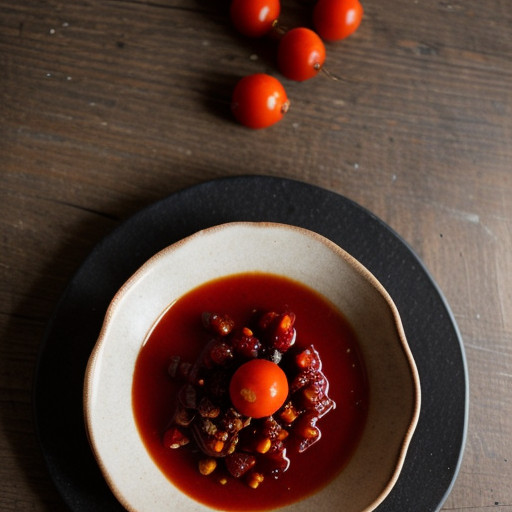
Rose Hip Jam
Description
This homemade Rose Hip Jam captures the bright, tangy essence of wild rose hips, creating a preserve that is both visually stunning and deliciously complex. Harvested after the first frost for optimal sweetness, the hips are simmered until tender and then meticulously strained to remove seeds and fibers, resulting in a smooth, jewel-toned spread. The natural pectin in the fruit allows it to set beautifully without artificial additives, while a touch of sugar balances the inherent tartness. Ideal for breakfast toast, yogurt swirls, or as a sophisticated condiment for charcuterie boards, this jam brings a rustic, garden-fresh flavor to any occasion. Its vibrant red hue and refreshing acidity make it a unique addition to your pantry, offering a taste of nature's bounty in every spoonful.Ingredients
Directions
-
Gather rose hips after the first frost and wash them thoroughly to remove any dirt or residue.
-
Place the cleaned rose hips in a large pot and cover with water.
-
Simmer the hips until they are very soft and falling apart.
-
Press the softened mixture through a food mill or colander to remove seeds and large particles.
-
Press the pulp through a finer sieve to remove smaller fibers and seed bits for a smooth texture.
-
Cook the strained pulp over medium heat, stirring occasionally, until it reduces and thickens significantly.
-
Continue cooking until the mixture is thicker than heavy cream.
-
Measure the pulp and add approximately one pound of sugar for every pound of pulp.
-
Stir in the sugar and taste, adding a bit more if desired to balance the tartness.
-
Cook over high heat, stirring constantly, until the mixture reaches a thick jam-like consistency.
-
Ladle the hot jam into sterilized jars, leaving appropriate headspace.
-
Seal the jars and process according to standard canning guidelines for high-acid preserves, or refrigerate for short-term storage.
Nutrition Facts
Servings 4
- Amount Per Serving
- Calories 412.8kcal
- % Daily Value *
- Total Fat 4.8g8%
- Saturated Fat 0.0g0%
- Cholesterol 0.0mg0%
- Sodium 9.6mg1%
- Total Carbohydrate 96.0g32%
- Dietary Fiber 50.9g204%
- Sugars 47.0g
- Protein 13.4g27%
* Percent Daily Values are based on a 2,000 calorie diet. Your daily value may be higher or lower depending on your calorie needs.
Note
Timing Tip: The exact cooking time for reducing the pulp can vary depending on the moisture content of the hips and the size of your pot. Watch for the consistency rather than a specific clock time.
Sugar Ratio: The guideline of 1:1 sugar to pulp by weight is a starting point. Rose hips are naturally tart and high in vitamin C. Adjust the sugar to your taste preference, keeping in mind that sugar also acts as a preservative.
Texture: For an extra smooth jam, pressing through a fine-mesh sieve is crucial to remove the tiny, irritating hairs and seed fragments common in rose hips.
Harvesting: Waiting until after the first frost can enhance the sweetness of the rose hips, as the cold weather concentrates the sugars.
Storage: If not canning, store in the refrigerator for up to 2-3 weeks. For long-term storage, freeze in airtight containers.
