

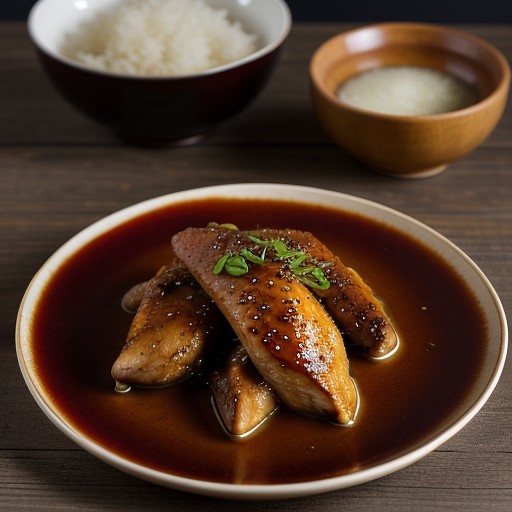
Shanghai Red-Cooked Chicken
Description
This Shanghai-style red-cooked chicken is a masterpiece of slow braising, transforming a whole bird into tender, fall-off-the-bone perfection. The dish features a rich, glossy sauce achieved through the careful caramelization of rock sugar and the deep umami of dark soy sauce. Aromatics like star anise, ginger, and green onions infuse the meat with complex, warm flavors, while the initial frying step ensures the skin stays intact and beautifully colored. It is a comforting, hearty main course that captures the essence of home-style Chinese cooking, ideal for family gatherings or special weeknight dinners.Ingredients
Directions
-
Wash the chicken thoroughly under cool water and pat dry. Trim off any large fat pockets around the cavity opening.
-
Place the chicken in a snug bowl. Brush or rub dark soy sauce all over the skin. Let it stand for 30 minutes, brushing with more soy sauce several times to ensure even coloring.
-
In a wok, heat the vegetable oil over medium-high heat. When the oil is hot but not smoking, carefully lower the chicken into the oil.
-
Hold the wok lid over the wok to protect against splattering, but do not cover it completely. Using a large spoon, baste the chicken with the hot oil and turn it once or twice until the skin browns evenly, about 10-15 minutes.
-
Carefully remove the chicken from the wok, trying not to break the skin, and set aside.
-
In a heavy pot or Dutch oven that fits the chicken snugly, heat the peanut oil over medium heat.
-
Add the green onion sections and minced ginger. Sauté until the onions are lightly browned.
-
Add the water, sherry, thin soy sauce, star anise, salt, and rock sugar. Bring the mixture to a boil.
-
While the liquid heats, loosely tie the legs of the chicken together with kitchen twine.
-
Lower the chicken into the boiling liquid. Bring the liquid back to a boil, then reduce the heat to maintain a very slow simmer.
-
Cover the pot and simmer for about 1 hour, or until the chicken is very tender. The chicken should be floating freely in the liquid.
-
Leave the chicken in the covered pot until 5 minutes before serving. Then, carefully remove the chicken to a serving platter and remove the twine.
-
Remove all but 1 cup of the cooking liquid from the pot, including the onion pieces.
-
Bring the remaining liquid to a boil. Stir in the cornstarch paste to thicken the sauce slightly.
-
Stir in the sesame oil. Pour the glossy sauce over the chicken and serve immediately.
Nutrition Facts
Servings 4
- Amount Per Serving
- Calories 1867.2kcal
- % Daily Value *
- Total Fat 145.4g224%
- Saturated Fat 28.0g140%
- Cholesterol 353.6mg118%
- Sodium 2020.8mg85%
- Total Carbohydrate 10.8g4%
- Dietary Fiber 1.9g8%
- Sugars 4.4g
- Protein 110.8g222%
* Percent Daily Values are based on a 2,000 calorie diet. Your daily value may be higher or lower depending on your calorie needs.
Note
Safety Tip: When frying the chicken, always hold the lid ready to shield against oil splatters, which can be dangerous.
Ingredient Substitution: If rock sugar is unavailable, you can use regular white sugar, though it won't provide the same glossy finish or subtle caramel flavor.
Storage: Store leftover chicken and sauce in an airtight container in the refrigerator for up to 3 days. Reheat gently to maintain tenderness.
Variation: For a spicier version, add dried red chili peppers to the braising liquid.
Cooking Tip: Ensure the chicken is fully submerged in the braising liquid for even cooking. If necessary, add more water or stock.
