

Thousand-Year-Old Eggs
Description
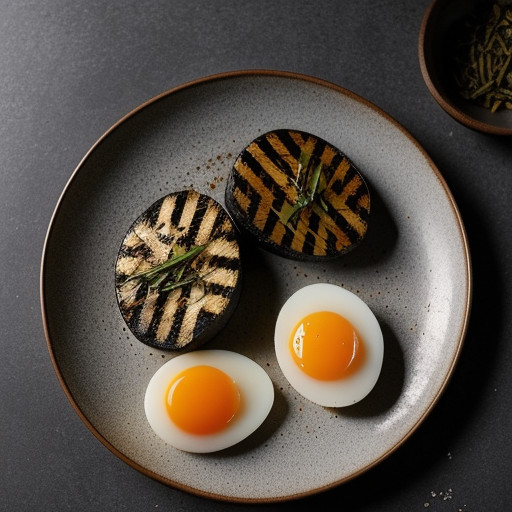
Thousand-year-old eggs, also known as century eggs or pidan, are a traditional Chinese delicacy created through a slow curing process that transforms fresh duck eggs into a culinary marvel. The alkaline mixture of tea, salt, lime, and wood ash causes the egg whites to turn into a dark, translucent jelly with a rich, savory aroma, while the yolks become creamy and gray-green with a distinct umami depth. These eggs are not actually aged for centuries but rather cured for several months to achieve their unique texture and complex flavor profile. They are best served chilled, cut into wedges, and enjoyed with sweet pickled scallions or a simple dipping sauce of soy sauce, vinegar, and ginger. This dish is a perfect addition to congee, salads, or as an elegant appetizer, offering a sophisticated taste experience that balances pungency with creaminess.Ingredients
Directions
-
Combine the strong black tea, salt, pine wood ashes, and slaked lime in a large bowl to form a thick, clay-like paste.
-
Ensure the mixture is well-blended and has a consistency thick enough to coat the eggs completely without dripping.
-
Using approximately 1/2 cup of the mixture per egg, thickly coat each fresh duck egg completely, ensuring no shell is exposed.
-
Line a large, clean crock with a layer of garden soil.
-
Carefully lay the coated eggs on top of the soil layer in the crock.
-
Cover the eggs completely with more garden soil to seal them.
-
Place the crock in a cool, dark, and dry location for the curing process.
-
Allow the eggs to cure for 100 days. Check occasionally to ensure the soil remains dry and the eggs are properly sealed.
-
After 100 days, remove the eggs from the crock and scrape off the dried coating.
-
Rinse the eggs thoroughly under running water to remove all traces of the curing mixture and soil.
-
Peel the eggs gently by cracking the shell lightly and removing it in pieces.
-
Cut the peeled eggs into wedges.
-
Serve chilled with sweet pickled scallions or a dipping sauce made from 2 tablespoons each of vinegar, soy sauce, and rice wine, plus 1 tablespoon of minced ginger root.
Nutrition Facts
Servings 12
- Amount Per Serving
- Calories 98.4kcal
- % Daily Value *
- Total Fat 1.0g2%
- Saturated Fat 0.1g1%
- Cholesterol 0.0mg0%
- Sodium 1200.0mg50%
- Total Carbohydrate 24.0g8%
- Dietary Fiber 8.2g33%
- Sugars 16.0g
- Protein 2.8g6%
* Percent Daily Values are based on a 2,000 calorie diet. Your daily value may be higher or lower depending on your calorie needs.
Note
Safety First: Slaked lime is caustic. Wear gloves and eye protection when handling and mixing the curing paste. Avoid inhaling the lime dust.
Sourcing Ingredients: Pine wood ashes can be obtained from burned pine wood. Slaked lime (calcium hydroxide) is available in garden stores, nurseries, or hardware stores. Ensure it is food-grade or pure enough for culinary use.
Egg Selection: Fresh duck eggs are traditional, but fresh chicken eggs can be substituted if duck eggs are unavailable. The curing time may vary slightly depending on egg size and freshness.
Appearance Note: The egg whites will turn a dark blackish-amber color with a gelatinous texture, while the yolks become gray-green and creamy. This is a normal result of the alkaline curing process.
Storage: Once peeled, consume the eggs within a few days. Unpeeled cured eggs can be stored in the refrigerator for several months.
Serving Suggestions: These eggs are excellent served with congee (rice porridge), in cold salads, or as part of a dim sum spread. The pungent flavor pairs well with mild, starchy foods.
