

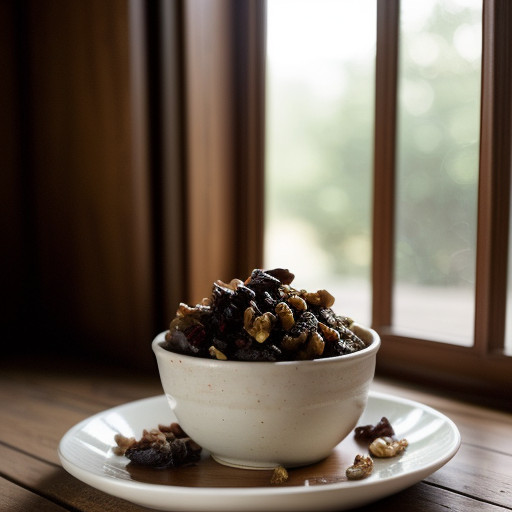
Yemenite Haroset
Description
Yemenite Haroset is a unique take on the traditional Passover dish, characterized by its smooth, paste-like consistency and aromatic spice blend. Unlike the chunky apple-based haroset common in Ashkenazi traditions, this version relies on dried fruits like dates, figs, and raisins, softened by sweet wine. The addition of cumin, cardamom, and ginger provides a warm, savory-sweet depth that reflects the rich culinary heritage of Yemenite Jews. This haroset is typically served alongside matzah during the Seder, offering a distinctively fragrant and cohesive texture that melts in the mouth. It is a beautiful, meaningful addition to any Passover table, celebrating diversity in Jewish culinary customs.Ingredients
Directions
-
Place the pitted dates, raisins, and dried figs into a food processor or blender.
-
Pulse the processor until the fruits are finely chopped.
-
Add 1/2 cup of the sweet wine to the processor.
-
Process again at low speed to help break down the fruits.
-
Add the walnuts, almonds, sesame seeds, cumin, ginger, cinnamon, and cardamom to the processor.
-
Add the remaining wine and process at low speed until the mixture reaches a nearly smooth, paste-like consistency.
Nutrition Facts
Servings 8
- Amount Per Serving
- Calories 712.6kcal
- % Daily Value *
- Total Fat 36.9g57%
- Saturated Fat 3.4g17%
- Cholesterol 0.0mg0%
- Sodium 9.4mg1%
- Total Carbohydrate 79.8g27%
- Dietary Fiber 11.6g47%
- Sugars 61.0g
- Protein 13.8g28%
* Percent Daily Values are based on a 2,000 calorie diet. Your daily value may be higher or lower depending on your calorie needs.
Note
Storage: Store the haroset in an airtight container in the refrigerator. It will keep for up to 5 days.
Texture: Yemenite haroset is traditionally smoother than other styles. If you prefer a slightly chunkier texture, reduce the blending time slightly.
Wine: Use a sweet red wine for best results. If you prefer a non-alcoholic version, you can substitute the wine with grape juice or pomegranate juice.
Spice Adjustment: The cumin provides a distinctive savory note. If you are new to this flavor profile, you may reduce the amount slightly, but it is a key component of the authentic taste.
yemenite, haroset, passover, seder, jewish, dates, figs, raisins, wine, cumin, cardamom, ginger, cinnamon, nuts, vegan, dairy-free, sweet, spiced, holiday, tradition
