

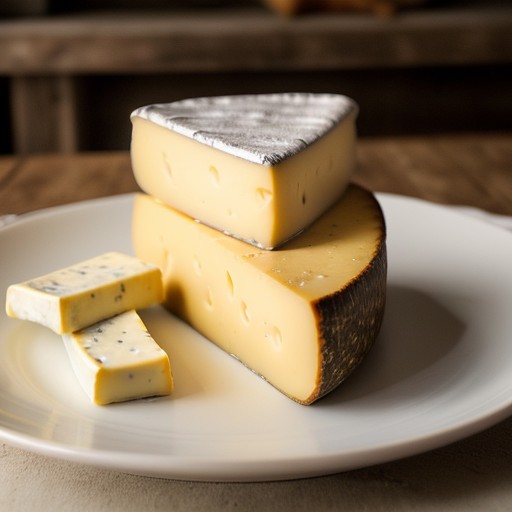
Cheese
Description
Experience the rewarding simplicity of crafting your own fresh cheese at home. This versatile recipe transforms a large volume of milk into a luxurious, creamy curd that rivals store-bought varieties. The resulting cheese boasts a mild, slightly tangy flavor and a soft, moist texture, perfect for immediate consumption or further aging. It is an excellent introduction to dairy fermentation, allowing you to control every aspect of the process. Enjoy it as a sophisticated appetizer with fresh fruit and honey, crumbled over salads, or melted into pasta dishes. The hands-on nature of stirring and draining the curds makes this a satisfying weekend project for passionate home cooks seeking to deepen their culinary skills.Ingredients
Directions
-
Take a large quantity of milk (approximately 10 gallons to yield less than 1/2 gallon of cheese) and place it in a large pot.
-
Cook the milk slowly on the stove, monitoring the temperature carefully.
-
As curds begin to form, add a cube or two of rennet to encourage coagulation.
-
Allow the curds to set naturally without constant stirring if you desire a texture similar to jack cheese; stir if you prefer a different consistency.
-
Let the curds cook until you are satisfied with the yield and texture.
-
Remove the curds from the heat and transfer them into a cheesecloth-lined strainer.
-
Allow the curds to drain thoroughly to remove excess whey.
-
Press the drained curds into a mold to shape the cheese.
Note
Cheese making is difficult primarily due to the challenge of finding a starter culture. The starter bacteria give different cheeses their distinctive flavor. Without it, the cheese often resembles pot cheese, farmer's cheese, or cottage cheese.
For the most flavorful results, unpasteurized milk is ideal, though it can be hard to source and may require obtaining directly from a cow. Goats milk is also a good option, tasting excellent even when pasteurized.
Remember that there are thousands of cheese varieties due to thousands of variations on this basic process. Experimentation is key.
cheese, homemade, fresh cheese, curds, rennet, milk, dairy, fermentation, mozzarella, farmer cheese, cottage cheese, jack cheese, artisan, kitchen, recipe, cooking, drain, mold, starter culture, unpasteurized
