

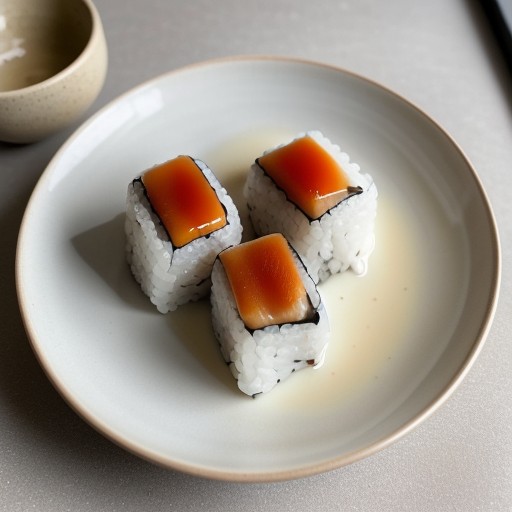
Sushi
Description
This classic Japanese recipe guides you through making authentic sushi from scratch, starting with the crucial shari rice seasoned with a balanced blend of vinegar, sugar, and salt. The dish highlights the delicate interplay between the tangy, slightly sweet rice and fresh, high-quality fillings like grilled shiitake mushrooms, sweet tamago omelet strips, and crisp kampyo gourd. Achieving the perfect texture requires patience—cooking the rice until tender yet distinct, and fanning it to achieve that signature glossy sheen. This meal is an exercise in precision and mindfulness, perfect for intimate dinner parties, special celebrations, or when you want to experience the art of Japanese cuisine at home. Serve with fresh wasabi, pickled ginger, and soy sauce for a complete, refreshing dining experience that balances flavors and textures in every bite.Ingredients
Directions
-
Rinse the short-grain rice thoroughly under cold water for about 5 minutes until the water runs clear. Let the rice drain in a colander for about 30 minutes.
-
In a saucepan, combine the rinsed rice, water, and konbu. Place over high heat and bring to a boil. Once boiling, remove the konbu and discard it. Let the rice boil uncovered for a few minutes, then cover the pan and reduce heat to low.
-
Cook the rice on low heat for 15 minutes. Remove from heat and let it sit covered for an additional 10 minutes to steam. Do not open the lid during this time.
-
While the rice is cooking, prepare the sushi seasoning (su). In a small saucepan, heat the rice wine vinegar, sugar, and salt over low heat, stirring until the sugar and salt are completely dissolved. Let the mixture cool to room temperature.
-
Transfer the cooked rice to a large, non-metallic bowl (wooden or glass). Set up a fan to blow on the rice while you season it. Using a rice paddle or wooden spoon, gently fold the cooled vinegar mixture into the rice a little at a time. Cut through the rice rather than stirring to avoid mashing the grains. Periodically dip the paddle in cool water to prevent sticking. Fan the rice until it is glossy and cool to the touch.
-
To prepare the shiitake filling: Soak the dried shiitake mushrooms in warm water for 1 hour until soft. Drain and reserve the soaking liquid if desired. In a pan, blend the dashi stock, soy sauce, mirin, and sugar. Add the soaked shiitake mushrooms. Simmer over low heat, uncovered, for 1 hour until the mushrooms are tender and the sauce has reduced. Let cool, then slice into sticks.
-
To prepare the kampyo filling: Soak the kampyo in hot water until soft, about 10 minutes. Drain and rub with a pinch of salt to clean, then rinse well and drain again. Place in a saucepan with the dashi stock, soy sauce, mirin, and sugar. Simmer over medium heat, uncovered, for 30 minutes. Turn up the heat to evaporate most of the sauce. Let cool and cut into strips of desired length.
-
To prepare the tamago (egg omelet): Mix water and cornstarch, then add sugar, salt, and beaten eggs. Heat a large non-stick skillet over medium heat. Pour in half of the egg mixture and cook until it just sets and begins to dry. Remove from pan and cut into long strips about 1/2 inch thick. Repeat with the remaining egg mixture.
-
To assemble Makizushi (rolled sushi): Place a sheet of toasted nori, shiny side down, on a bamboo rolling mat. Wet your hands to prevent sticking. Spread about 3/4 cup of seasoned rice evenly over the nori, leaving the top edge free. Place your chosen fillings (shiitake, kampyo, tamago, cucumber, etc.) in a line across the center. Roll tightly using the mat, moisten the top edge of the nori with water to seal, and finish rolling. Cut into 1-1.5 inch thick pieces with a sharp, wet knife.
-
To assemble Nigirizushi (hand-pressed sushi): Wet your hands with a mixture of 2/3 water and 1/3 vinegar. Take about 2 tablespoons of rice and press firmly into an oval shape with your fingers. Place a slice of fresh fish on top, applying a small amount of wasabi if desired. Gently press the rice onto the fish to adhere. Shape the sushi by rolling it slightly in your hand and pressing the sides to firm it up. Place on a serving tray.
Note
Storage: Sushi rice is best served at room temperature. Cover with a moist towel to prevent drying out. Do not refrigerate sushi rice as it will harden.
Food Safety: If using raw fish, ensure it is sushi-grade. For safety against parasites, freeze fish slices for at least 24 hours before using, then thaw.
Variations: Common fillings include fresh tuna, salmon, avocado, pickled daikon, and fried tofu. For Umekyu, add a small amount of umeboshi paste to the filling.
Serving: Serve sushi with fresh wasabi, pickled ginger (gari), and soy sauce. Traditionally, dip the fish side of nigiri into soy sauce, not the rice, to prevent the rice from falling apart.
Technique: Keep a bowl of water with a splash of vinegar nearby to wet your fingers while handling rice to prevent sticking.
