

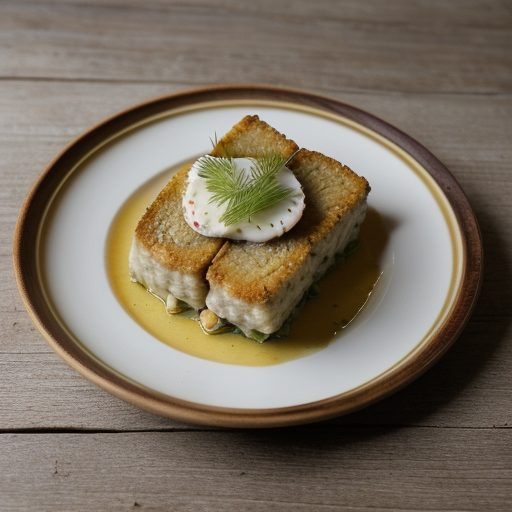
Gefilte Fish –Pareve
Description
This classic pareve gefilte fish recipe delivers the authentic taste of traditional Jewish cuisine without dairy or meat. Made with a blend of whitefish, pike, and carp, the fish is ground with onions, spices, and egg to form smooth, delicate balls. These are gently poached in a rich, clear broth infused with carrots, parsley, and dill. The result is a tender, savory appetizer with a subtle sweetness from the carrots and a bright finish from lemon zest. Perfect for Passover Seder tables, Shabbat meals, or as a light starter for any gathering, this dish is both comforting and elegant. The broth thickens slightly when chilled, creating a beautiful gelatinous presentation if desired.Ingredients
Directions
-
Rinse fish bones and heads, then place them in a large heavy Dutch oven.
-
Add sliced onions, shallots, celery, carrots, parsnip, parsley, thyme, dill, and lemon zest to the pot.
-
Pour in the white wine and water.
-
Bring the mixture to a boil, then reduce heat to a simmer.
-
Cover and simmer for 1 hour.
-
Strain the broth through a fine sieve into a large bowl, pressing solids to extract juice, then discard solids.
-
Remove a few carrot slices from the strained solids and set aside for garnish; return the clear broth to the pot.
-
Cut remaining onion into 1-inch pieces and halve the shallots.
-
Place onion and shallots in a food processor.
-
Rinse the fish fillets, check for bones, cut into 2-inch pieces, and add to the processor.
-
Add spices, parsley, and half the salt to the processor.
-
Process for 30 seconds until finely ground.
-
Add 1 whole egg and 1 egg white, then process briefly to combine.
-
With the processor running, pour in cold seltzer water and process for 15 seconds.
-
Scrape the mixture into a large bowl.
-
Sprinkle with matzo meal and blend thoroughly.
-
Whip the remaining egg whites until firm peaks form, then fold them gently into the fish mixture.
-
Cover the bowl and chill in the freezer for 15 minutes to firm up the mixture.
-
Bring the broth back to a boil and add the remaining salt.
-
Using moistened hands, shape the chilled fish mixture into 12 oval balls.
-
Gently lower the fish balls into the simmering broth.
-
Reduce heat to a steady slow boil, cover, and cook for 45 minutes.
-
After 10 minutes, spoon hot broth over the fish balls to ensure even cooking.
-
Once the fish balls puff up and rise to the top, partially uncover the pot and let them cool in the broth for 30 minutes.
-
Add the reserved carrot slices to the broth.
-
Refrigerate overnight or transfer fish and broth to containers and refrigerate until chilled.
Nutrition Facts
Servings 12
- Amount Per Serving
- Calories 692.0kcal
- % Daily Value *
- Total Fat 34.9g54%
- Saturated Fat 18.9g95%
- Cholesterol 192.9mg65%
- Sodium 243.7mg11%
- Total Carbohydrate 23.6g8%
- Dietary Fiber 6.6g27%
- Sugars 9.3g
- Protein 55.9g112%
* Percent Daily Values are based on a 2,000 calorie diet. Your daily value may be higher or lower depending on your calorie needs.
Note
For a jelled broth, dissolve 1 package of pareve unflavored gelatin in the boiling stock before refrigerating.
If the fish mixture does not hold together after chilling, add more matzo meal, one tablespoon at a time.
The broth will naturally thicken when chilled due to the collagen from the fish bones.
Serve cold, traditionally with horseradish sauce on the side.
Ensure all fish is thoroughly deboned before processing to avoid any hard fragments in the final dish.
gefilte fish, pareve, jewish, passover, fish balls, poached fish, whitefish, carp, pike, broth, appetizer, traditional, shabbat, seders, kosher, matzo meal, fish broth, poaching, deli style, fisherman
