

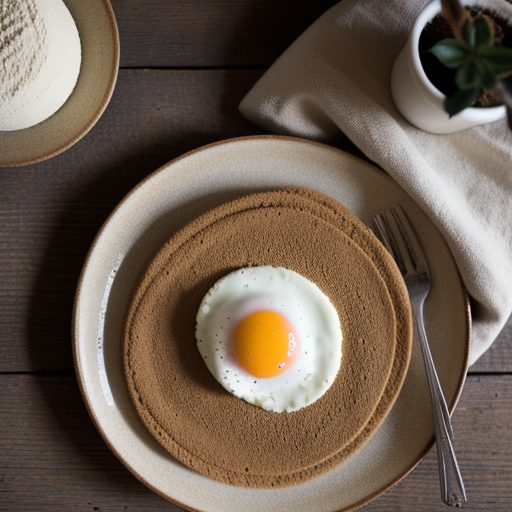
This homemade Injera is a staple of Ethiopian cuisine, characterized by its spongy texture and distinctive sourdough-like tang. Traditionally made from teff, this adapted version uses millet to create a similar porous structure that is perfect for scooping up stews and curries. The batter requires a short fermentation period to develop its unique flavor profile and airy holes, known as “eyes.” Serve it warm alongside Doro Wat or Misir Wat for an authentic dining experience. It pairs beautifully with rich, spicy sauces, absorbing the flavors while providing a soft, chewy contrast. This recipe simplifies the traditional process, making it accessible for home cooks while retaining the essential character of this beloved bread.
Injera
Description
This homemade Injera is a staple of Ethiopian cuisine, characterized by its spongy texture and distinctive sourdough-like tang. Traditionally made from teff, this adapted version uses millet to create a similar porous structure that is perfect for scooping up stews and curries. The batter requires a short fermentation period to develop its unique flavor profile and airy holes, known as "eyes." Serve it warm alongside Doro Wat or Misir Wat for an authentic dining experience. It pairs beautifully with rich, spicy sauces, absorbing the flavors while providing a soft, chewy contrast. This recipe simplifies the traditional process, making it accessible for home cooks while retaining the essential character of this beloved bread.Ingredients
Directions
-
Process uncooked millet in a blender in small batches until it resembles fine flour. Remove to a bowl and set aside.
-
In the blender container, combine club soda, egg, baking powder, and baking soda. Process using an on-off motion until combined.
-
Add ground millet and process at high speed into a smooth batter, about 1 minute.
-
Pour batter into a 4-cup measure, cover, and let stand at room temperature until fermented and foamy, about 1 1/2 hours.
-
Spray a 10-inch nonstick skillet with nonstick cooking spray and heat over medium-high heat.
-
Stir batter gently to redistribute ingredients.
-
Pour 1/6 of the batter (about scant 1/3 cup) into the hot skillet and quickly swirl so that it covers the entire bottom.
-
Cover skillet with a tight-fitting lid and cook over high heat until bread is spongy and moist with air holes, about 1 minute. Do not brown the bottom.
-
Transfer cooked injera to a plate and cool slightly.
-
Repeat procedure with remaining batter to make 5 more breads.
-
To serve, fold each bread into quarters.
Nutrition Facts
Servings 6
- Amount Per Serving
- Calories 123.0kcal
- % Daily Value *
- Total Fat 1.0g2%
- Saturated Fat 0.2g1%
- Cholesterol 0.0mg0%
- Sodium 2.0mg1%
- Total Carbohydrate 24.0g8%
- Dietary Fiber 1.3g6%
- Sugars 0.0g
- Protein 3.5g8%
* Percent Daily Values are based on a 2,000 calorie diet. Your daily value may be higher or lower depending on your calorie needs.
Note
Do not brown the bottom of the injera; if it browns, the edges will become crisp and the bread will crack when folded. The goal is a spongy, moist texture.
For a more traditional flavor, you can substitute teff flour for millet, though it will require a longer fermentation time (24-48 hours).
Store cooled injera wrapped in plastic wrap or in an airtight container in the refrigerator for up to 3 days. Reheat gently in a dry skillet or microwave.
If the batter is too thick, add a splash of water. If too thin, add a teaspoon of flour.
