

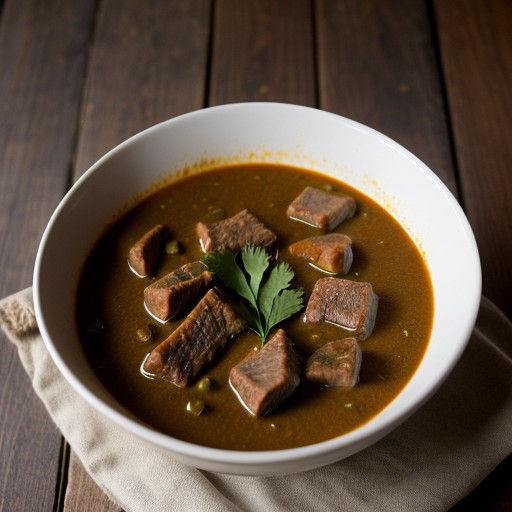
KARI-KARE-Meat-and-Vegetable-Stew-in-Peanut-Sauce_1
Description
Kare-Kare is a beloved Filipino delicacy known for its luxurious texture and deep, nutty flavor profile. This hearty stew typically features slow-cooked pork hocks or oxtail, which become incredibly tender and melt-in-your-mouth over time. The dish is brought together by a thick, aromatic sauce made from ground peanuts and toasted rice, providing a unique umami richness that distinguishes it from other curries. Vegetables like eggplant, green beans, and banana blossoms add freshness and color. It is traditionally served with steamed rice and a side of bagoong (fermented shrimp paste) to balance the sweetness of the peanut sauce. Perfect for family gatherings or special occasions, this recipe delivers comfort and warmth in every bowl.Ingredients
Directions
-
Place the pork hocks or oxtail pieces in a large pot and add enough water to cover them.
-
Bring the water to a boil, then lower the heat and simmer for 1 to 1.5 hours, or until the meat is tender.
-
Remove the meat from the broth and set aside; reserve 2 cups of the cooking broth for the sauce.
-
In a separate skillet, heat 2 tablespoons of cooking oil over medium heat.
-
Add the minced garlic and sliced onions to the skillet and sauté until fragrant and softened.
-
Add the cooked meat back into the skillet along with the reserved 2 cups of broth.
-
Stir in the salt and achuete water (if using) and simmer for 15 minutes to allow flavors to meld.
-
Whisk the peanut butter and toasted rice powder with a small amount of warm broth until smooth, then stir this mixture into the pot.
-
Bring the sauce back to a simmer and cook, stirring occasionally, for 5 minutes until thickened.
-
Add the green beans and eggplant to the stew.
-
Cook for another 10 minutes, or until the vegetables are tender but still crisp.
-
Taste and adjust seasoning with more salt if necessary.
-
Serve hot with steamed rice and a side of bagoong (fermented shrimp paste).
Nutrition Facts
Servings 4
- Amount Per Serving
- Calories 686.7kcal
- % Daily Value *
- Total Fat 39.7g62%
- Saturated Fat 14.2g71%
- Cholesterol 227.0mg76%
- Sodium 175.9mg8%
- Total Carbohydrate 0.0g0%
- Dietary Fiber 0.0g0%
- Sugars 0.0g
- Protein 76.6g154%
* Percent Daily Values are based on a 2,000 calorie diet. Your daily value may be higher or lower depending on your calorie needs.
Note
Achuete water (annatto water) provides the traditional golden-orange color. If you don't have achuete seeds, you can soak annatto powder in hot water or use a small amount of turmeric for color, though the flavor will differ slightly.
To make achuete water: Soak 1 tablespoon of achuete seeds in 1/2 cup of hot water for 30 minutes. Squeeze the seeds between your fingers to release the red pigment into the water, then strain and discard the seeds.
Toasted rice powder (bagoong mon) adds a subtle nutty depth and helps thicken the sauce. If unavailable, you can use plain peanut butter or a slurry of cornstarch and water, but the flavor will be less authentic.
Kare-Kare is best served immediately but can be stored in an airtight container in the refrigerator for up to 3 days. Reheat gently on the stove, adding a splash of water or broth if the sauce has thickened too much.
For a richer version, you can substitute half the water with coconut milk during the simmering stage.
Always serve with bagoong (shrimp paste) on the side; the salty, savory punch balances the sweet, nutty richness of the peanut sauce perfectly.
