

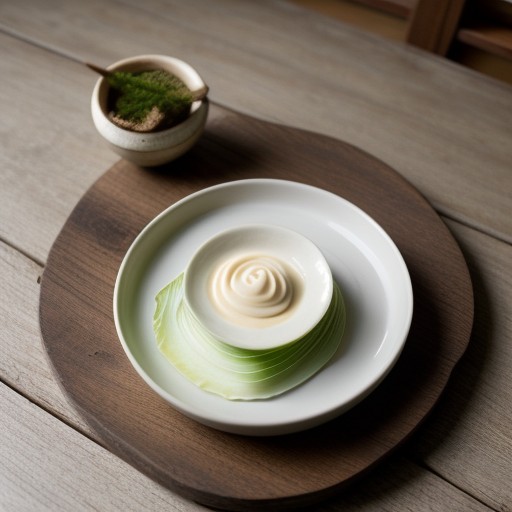
Kim Chi
Description
This classic Korean kimchi is a vibrant, spicy, and tangy fermented side dish that adds depth to any meal. Made with crisp Chinese cabbage, savory garlic, and a hint of sweetness from pear, it offers a complex flavor profile that develops over time. The fermentation process creates a unique texture and probiotic-rich goodness, making it both delicious and healthy. Perfect as a condiment for rice bowls, stews, or enjoyed on its own, this recipe captures the authentic taste of home-style Korean cooking. Its a staple that improves with age, offering a zesty kick that complements rich and savory dishes beautifully.Ingredients
Directions
-
Remove the outer leaves from the cabbage and set them aside for later use.
-
Quarter the cabbage and place it together with the reserved outer leaves in a large bowl.
-
Sprinkle 1 cup of salt over the cabbage.
-
Let the cabbage stand for 3 hours, turning occasionally to ensure even salting.
-
Peel the daikon and cut it into long, thin strips.
-
Cut the green onions into 1-inch strips and then shred them lengthwise into slivers.
-
Mix the daikon and onion strips together in a separate bowl and let sit while the cabbage salts.
-
Peel and mince the garlic and gingerroot.
-
Cut the celery into 1-inch lengths and shred them lengthwise.
-
Peel, core, and slice the pear, then cut it into long strips.
-
Mix the garlic, ginger, celery, and pear strips together with the ground red pepper and granulated sugar.
-
Combine this spice mixture into the daikon and onion bowl.
-
Remove the outer leaves from the brine produced by the cabbage and set them aside.
-
Rinse one quarter of the cabbage head under running water to remove excess salt.
-
Pack the daikon and onion mixture between the leaves of the rinsed cabbage quarter.
-
Place the stuffed cabbage quarter in the bottom of a crock or fermentation container.
-
Repeat the rinsing and stuffing procedure with the remaining three quarters of the cabbage.
-
Layer any remaining spice mixture over the top of the cabbage.
-
Press down firmly on the cabbage to release air bubbles.
-
Place the reserved outer leaves on top of the cabbage to cover it completely.
-
Cover the crock and set a small weight on top of the cover.
-
Let the kimchi sit at room temperature for 3 days to ferment.
Nutrition Facts
Servings 12
- Amount Per Serving
- Calories 75.0kcal
- % Daily Value *
- Total Fat 0.3g1%
- Saturated Fat 0.0g0%
- Cholesterol 0.0mg0%
- Sodium 54.0mg3%
- Total Carbohydrate 17.4g6%
- Dietary Fiber 7.5g30%
- Sugars 9.6g
- Protein 3.9g8%
* Percent Daily Values are based on a 2,000 calorie diet. Your daily value may be higher or lower depending on your calorie needs.
Note
The longer the kimchi ferments, the stronger and tangier the flavor becomes.
Store the kimchi in a cool place (around 60F/15C) before opening. It can be stored for up to a month prior to serving.
After removing the kimchi from the fermentation crock, it can be stored in glass jars in the refrigerator and used as needed.
For a spicier kick, add diced red peppers with seeds to the daikon and onion mixture, but proceed with caution as it increases heat significantly.
kimchi, korean, cabbage, fermented, spicy, vegetarian, vegan, daikon, garlic, ginger, pear, preservation, probiotic, side dish, traditional, asian, spicy cabbage, homemade
