

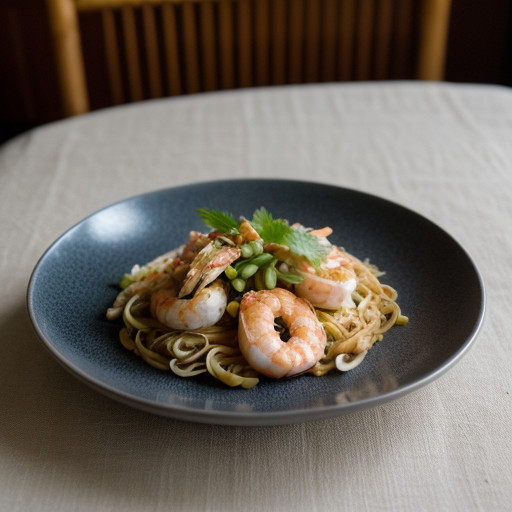
Kwitiaow Pad Thai
Description
This classic Thai street-food favorite, Kwitiaow Pad Thai, is a delightful balance of sweet, sour, and savory flavors. Glass noodles (cellophane noodles) absorb the rich tamarind-based sauce perfectly, providing a unique chewy texture distinct from traditional rice noodles. The dish is packed with protein from firm tofu and raw prawns, offering a hearty and satisfying meal that comes together in under 30 minutes. Crisp bean sprouts and preserved radish add necessary crunch and brightness, while toasted peanuts provide a nutty finish. It is an excellent choice for a quick weeknight dinner or a flavorful lunch. The combination of ingredients ensures every bite is full of authentic Thai flavor, making it a recipe you will want to make again and again for its comforting yet exciting profile.Ingredients
Directions
-
Drain the soaked noodles and set aside.
-
Heat 2 tablespoons of oil in a wok or large skillet over high heat.
-
Add the diced tofu and fry until golden brown on all sides; remove and set aside.
-
Add remaining oil to the wok, then toss in the raw prawns and dried shrimps.
-
Stir-fry the seafood for 1-2 minutes until prawns turn pink.
-
Push the seafood to one side of the wok and crack the eggs into the empty space.
-
Scramble the eggs until just cooked, then mix them with the seafood.
-
Add the soaked noodles, chicken stock, and sliced shallots to the wok.
-
Toss everything together vigorously for 1-2 minutes until noodles are heated through and sauce is absorbed.
-
Add the bean sprouts, preserved radish, and fried tofu back into the wok.
-
Toss briefly for 30 seconds to wilt the sprouts slightly but keep them crunchy.
-
Remove from heat and garnish with chopped peanuts and sliced spring onions.
-
Serve immediately while hot.
Nutrition Facts
Servings 6
- Amount Per Serving
- Calories 306.2kcal
- % Daily Value *
- Total Fat 30.3g47%
- Saturated Fat 3.9g20%
- Cholesterol 0.0mg0%
- Sodium 10.6mg1%
- Total Carbohydrate 9.4g4%
- Dietary Fiber 3.4g14%
- Sugars 4.8g
- Protein 2.1g5%
* Percent Daily Values are based on a 2,000 calorie diet. Your daily value may be higher or lower depending on your calorie needs.
Note
For a vegan version, omit the prawns, dried shrimps, and eggs. Use vegetable stock instead of chicken stock and ensure your tofu is firm and well-pressed.
If using dried cellophane noodles, ensure they are soaked until pliable but still slightly firm, as they will continue to cook in the wok. Over-soaking can lead to mushy noodles.
Traditional Pad Thai sauce typically includes tamarind paste, fish sauce, and palm sugar. Since these are not listed in the base ingredients, you may add 2 tbsp tamarind paste, 2 tbsp fish sauce, and 1 tbsp sugar for authentic flavor.
Bean sprouts and preserved radish should be added at the very end to maintain their crisp texture, which provides a crucial contrast to the soft noodles.
Leftovers can be stored in an airtight container in the refrigerator for up to 2 days. Reheat gently in a wok with a splash of water to prevent the noodles from drying out.
