

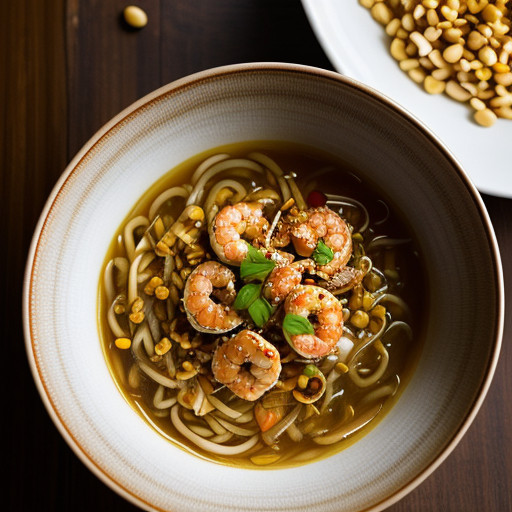
Kwitiaow Phad Thai (Thai-Fried Noodles and Sauce)
Description
Experience the authentic flavors of Thailand with this classic Kwitiaow Phad Thai. This dish features chewy rice noodles tossed in a wok with succulent shrimp, firm tofu, and crunchy bean sprouts. The signature sauce, a balance of tamarind, fish sauce, and palm sugar, provides a complex sweet, sour, and salty profile that coats every bite. Garnished with crushed peanuts, scallions, and dried shrimp, it offers a delightful mix of textures. Perfect for a quick weeknight dinner or an impressive meal for guests, this recipe captures the essence of street-style Thai cooking. It is vibrant, aromatic, and deeply satisfying, bringing the bustling energy of a Bangkok night market straight to your dining table.Ingredients
Directions
-
Soak the rice noodles in warm water for 30 minutes until pliable, then drain and set aside.
-
Heat peanut oil in a large wok or skillet over high heat until smoking.
-
Add the diced tofu and stir-fry for 2-3 minutes until golden brown on all sides; remove and set aside.
-
In the same wok, add the large raw shrimp and cook for 1-2 minutes until pink and opaque; remove and set aside.
-
Add the sliced shallots and scallions to the wok, stir-frying for 30 seconds until fragrant.
-
Add the drained noodles, bean sprouts, and chicken stock to the wok.
-
Toss the noodles vigorously with tongs, ensuring they are coated in oil and heated through.
-
Return the cooked shrimp and tofu to the wok.
-
Add the preserved sweet white radish, chopped dried shrimp, and chopped peanuts.
-
Stir-fry everything together for another minute until well combined and hot.
-
Remove from heat and serve immediately, garnished with additional peanuts and lime wedges if desired.
Nutrition Facts
Servings 6
- Amount Per Serving
- Calories 446.8kcal
- % Daily Value *
- Total Fat 31.4g49%
- Saturated Fat 4.1g21%
- Cholesterol 266.0mg89%
- Sodium 558.1mg24%
- Total Carbohydrate 7.7g3%
- Dietary Fiber 2.9g12%
- Sugars 3.9g
- Protein 36.9g74%
* Percent Daily Values are based on a 2,000 calorie diet. Your daily value may be higher or lower depending on your calorie needs.
Note
Ingredient Note: The original ingredient list contained merged text. Standard Phad Thai requires eggs, tamarind paste, fish sauce, and palm sugar for the authentic sauce, which were missing from the explicit ingredient list but implied by the title and dish type. The steps above assume a standard sauce mixture is prepared or added.
Noodle Tip: Do not soak the noodles until they are fully soft; they should still have a bit of chew as they will continue to cook in the wok.
Storage: Leftover Phad Thai can be stored in an airtight container in the refrigerator for up to 2 days. Reheat in a skillet with a splash of water to refresh the noodles.
Substitutions: For a vegetarian version, omit the shrimp and dried shrimp, and substitute fish sauce with soy sauce or tamari. Use vegetable stock instead of chicken stock.
Texture: The preserved sweet white radish (chua) adds a unique crunchy and sweet-sour element. If unavailable, extra bean sprouts or pickled daikon can be used, though the flavor profile will differ.
Heat Management: Ensure your wok is very hot before adding ingredients to prevent the noodles from becoming mushy. Stir-fry quickly and continuously.
