

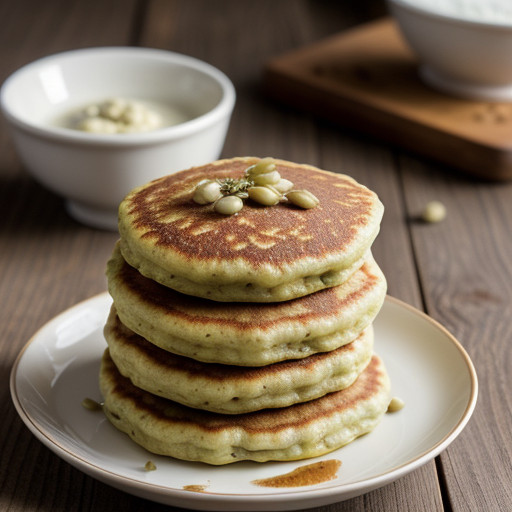
Mung Bean Pancakes – Bindae Duk
Description
Bindae duk is a beloved Korean classic that transforms humble mung beans into crispy, savory pancakes. These golden-brown treats feature a delicate bean paste enriched with fermented kimchi, fresh green onions, and tender bits of ham or pork. The texture is uniquely crisp on the outside while remaining soft and flavorful within. Perfect for a hearty breakfast, a quick lunch, or as a satisfying snack, they pair wonderfully with a dipping sauce of soy sauce and gochujang. This recipe captures the authentic home-style flavor of Korea, offering a gluten-free and protein-rich option that is both comforting and exciting for the palate.Ingredients
Directions
-
Soak the hulled split mung beans in cold water overnight, then drain well.
-
Place the soaked mung beans in a food processor or blender and grind to a fairly smooth paste, adding about 1 cup of cold water to help blend.
-
In a large bowl, combine the bean paste with the finely diced ham, chopped kimchi, chopped green onions, crushed garlic, salt, black pepper, and beaten eggs.
-
Stir the mixture vigorously until all ingredients are well combined and the batter is consistent.
-
Heat a heavy skillet over medium heat and lightly oil it with a mixture of vegetable and sesame oils.
-
Drop spoonfuls of the batter onto the hot skillet, flattening them slightly if desired.
-
Cook the pancakes until the bottom is golden brown and small bubbles appear on the surface.
-
Flip the pancakes over and cook the other side until golden brown and cooked through.
-
As each pancake is done, remove it from the skillet and stack them under a clean cloth to keep them warm and soft.
-
Serve hot or cold with a dipping sauce made from soy sauce and chili paste.
Nutrition Facts
Servings 18
- Amount Per Serving
- Calories 23.2kcal
- % Daily Value *
- Total Fat 0.2g1%
- Saturated Fat 0.0g0%
- Cholesterol 0.0mg0%
- Sodium 351004.5mg14626%
- Total Carbohydrate 5.2g2%
- Dietary Fiber 2.0g8%
- Sugars 2.5g
- Protein 1.4g3%
* Percent Daily Values are based on a 2,000 calorie diet. Your daily value may be higher or lower depending on your calorie needs.
Note
Mung beans used here are peeled and split in half. Ensure you buy hulled split mung beans for the correct texture.
If you do not have kimchi, you can substitute it with finely chopped Chinese cabbage. If using cabbage, add a little chili powder to the batter to mimic the fermented spice of kimchi.
For a vegetarian or vegan version, omit the ham and eggs. You can substitute the beans with soybeans, canned chickpeas, or yellow lentils if mung beans are unavailable, though the flavor profile will change.
These pancakes can be stored in an airtight container in the refrigerator for up to 3 days. Reheat in a skillet or oven to restore crispiness.
Traditionally, these are served with a dipping sauce of soy sauce mixed with gochujang (Korean chili paste) and a drizzle of sesame oil.
