

This authentic Shrimp Creole delivers bold, spicy flavors with a rich tomato-based sauce brimming with the “holy trinity” of Cajun cooking: onions, celery, and bell peppers. The dish begins with a deeply flavorful base made by simmering vegetables and spices into a robust sauce, which is then strained for a smooth consistency. Fresh shrimp are quickly sautéed and folded into the sauce, ensuring they remain tender and juicy. The result is a comforting yet zesty meal that balances heat, acidity, and savory depth.
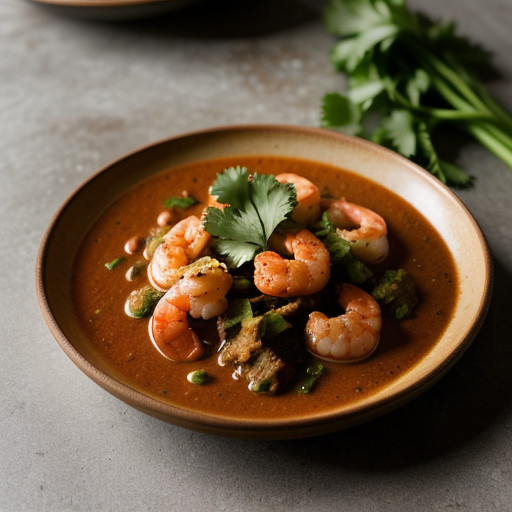
Pat’s Shrimp Creole
Description
This authentic Shrimp Creole delivers bold, spicy flavors with a rich tomato-based sauce brimming with the "holy trinity" of Cajun cooking: onions, celery, and bell peppers. The dish begins with a deeply flavorful base made by simmering vegetables and spices into a robust sauce, which is then strained for a smooth consistency. Fresh shrimp are quickly sautéed and folded into the sauce, ensuring they remain tender and juicy. The result is a comforting yet zesty meal that balances heat, acidity, and savory depth.Directions
-
Melt 6 tablespoons of butter in a 3-quart saucepan over medium heat.
-
Add the first batch of chopped onion, celery, and bell pepper to the saucepan.
-
Sauté the vegetables for about 10 minutes until softened.
-
Stir in the tomato puree, peeled tomatoes, bay leaves, oregano, thyme, and Creole seafood seasoning.
-
Cook the mixture for an additional 10 minutes, stirring occasionally.
-
Pour in the seafood stock and bring the mixture to a boil.
-
Reduce heat to low and simmer uncovered until the sauce begins to thicken, approximately 45 minutes.
-
Remove the saucepan from heat and strain the sauce through a fine-mesh sieve into a bowl, discarding the cooked vegetables and bay leaves.
-
Melt the remaining 1/4 cup of butter in a large sauté pan over medium heat.
-
Add the second batch of chopped onion and sprinkle with brown sugar.
-
Sauté the onion until it is golden brown and caramelized.
-
Add the second batch of chopped celery and bell pepper to the pan.
-
Sauté for an additional 3 to 4 minutes until the vegetables are tender-crisp.
-
Reduce the heat to low and stir the reserved strained sauce into the sautéed vegetables.
-
Simmer the combined mixture gently for 10 minutes to meld the flavors.
-
Add the peeled and deveined shrimp to the pan.
-
Cook just until the shrimp turn pink and opaque, about 2-3 minutes.
-
Serve immediately over steamed rice or jambalaya.
Nutrition Facts
Servings 4 servings
- Amount Per Serving
- Calories 250.1kcal
- % Daily Value *
- Total Fat 18.8g29%
- Saturated Fat 11.5g58%
- Cholesterol 48.4mg17%
- Sodium 197.5mg9%
- Total Carbohydrate 20.3g7%
- Dietary Fiber 6.4g26%
- Sugars 9.5g
- Protein 3.4g7%
* Percent Daily Values are based on a 2,000 calorie diet. Your daily value may be higher or lower depending on your calorie needs.
shrimp creole, cajun shrimp, creole sauce, spicy seafood, shrimp stew, tomato shrimp, cayenne pepper, bell pepper, onion celery, seafood stock, jambalaya topping, new orleans, southern cooking, peeled shrimp, bay leaf, oregano, thyme, weeknight dinner, comfort food, rice bowl
