

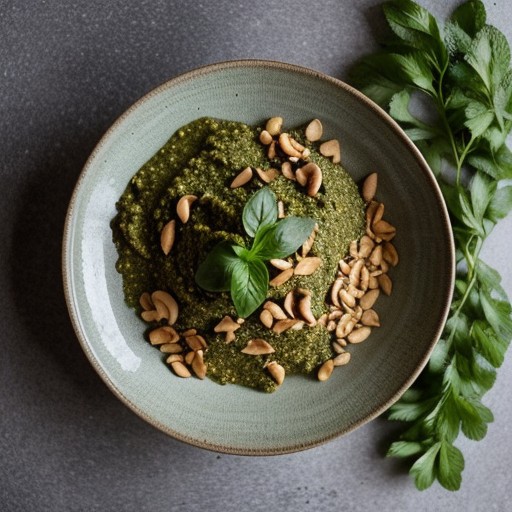
This unique pesto bridges the gap between Italian tradition and Asian flair, creating a complex, aromatic sauce perfect for noodles or vegetables. Unlike traditional basil pesto, this version incorporates raw peanuts for a rich, nutty depth and a creamy texture. Fresh mint and cilantro provide bright, herbal notes, while green chilies, ginger, and garlic add a spicy, pungent kick. The use of peanut oil enhances the Asian profile, tying the flavors together seamlessly. This versatile sauce is ideal for tossing with warm ramen, cold soba, or even as a dip for crisp vegetables. It’s a quick, no-cook (except for toasting nuts) preparation that delivers restaurant-quality flavor at home. The balance of sweet, salty, spicy, and herbal makes it a standout condiment for adventurous eaters.
Pesto, Asian “Bruce Cost’S Asian Ingredients”
Description
This unique pesto bridges the gap between Italian tradition and Asian flair, creating a complex, aromatic sauce perfect for noodles or vegetables. Unlike traditional basil pesto, this version incorporates raw peanuts for a rich, nutty depth and a creamy texture. Fresh mint and cilantro provide bright, herbal notes, while green chilies, ginger, and garlic add a spicy, pungent kick. The use of peanut oil enhances the Asian profile, tying the flavors together seamlessly. This versatile sauce is ideal for tossing with warm ramen, cold soba, or even as a dip for crisp vegetables. It&# 226;ÂÂs a quick, no-cook (except for toasting nuts) preparation that delivers restaurant-quality flavor at home. The balance of sweet, salty, spicy, and herbal makes it a standout condiment for adventurous eaters.Ingredients
Directions
-
Heat peanut oil in a small skillet over medium heat until nearly smoking.
-
Remove skillet from heat and add raw peanuts.
-
Allow peanuts to sit in the hot oil until lightly browned, stirring occasionally.
-
Remove peanuts with a slotted spoon and drain on paper towels, reserving the hot oil.
-
Place toasted peanuts in a food processor or blender and blend until a rough paste forms.
-
Add seeded green chilies, chopped fresh ginger, and minced garlic to the processor.
-
Blend until the aromatics are finely chopped and incorporated into the peanut paste.
-
Add fresh basil, mint, and cilantro leaves along with a small amount of the reserved hot oil.
-
Blend until the herbs are finely minced but still retain some texture.
-
Add salt, sugar, and lemon juice, then blend until smooth and well combined.
-
Transfer the mixture to a serving bowl and stir in the remaining reserved oil.
-
Serve alongside warm or cold noodles, allowing each person to spoon the sauce over their portion to taste.
Nutrition Facts
Servings 2
- Amount Per Serving
- Calories 826.0kcal
- % Daily Value *
- Total Fat 76.4g118%
- Saturated Fat 11.1g56%
- Cholesterol 0.0mg0%
- Sodium 15.4mg1%
- Total Carbohydrate 36.8g13%
- Dietary Fiber 15.1g61%
- Sugars 2.8g
- Protein 14.7g30%
* Percent Daily Values are based on a 2,000 calorie diet. Your daily value may be higher or lower depending on your calorie needs.
Note
Storage: Store in an airtight container in the refrigerator for up to 5 days. The oil may solidify when cold; let it come to room temperature before serving.
Substitutions: You can substitute raw cashews or almonds for peanuts if desired, though the flavor profile will change. Use serrano or jalapeno peppers for varying levels of heat.
Tip: Ensure the chilies are seeded if you prefer a milder sauce. Toasting the peanuts in the oil infuses them with flavor and enhances the nuttiness.
Variation: For a smoother consistency, blend longer or add a tablespoon of water or sesame oil.
