

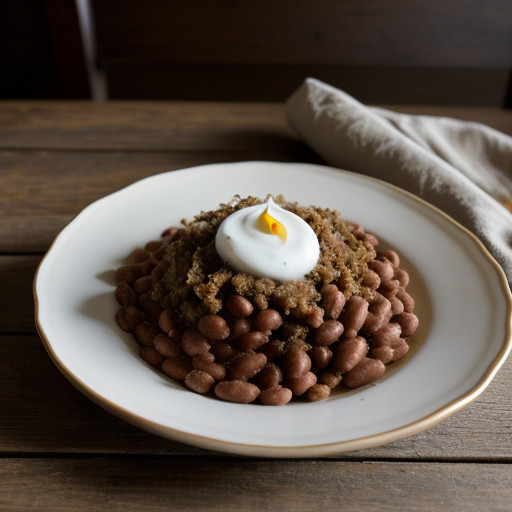
Pigeon Forge Pintos
Description
These Pigeon Forge Pintos are the ultimate comfort food, offering a deep, complex flavor profile that balances the earthiness of pinto beans with the rich sweetness of molasses and brown sugar. The secret lies in the long, slow baking process, which allows the beans to become incredibly tender while the salt pork renders slowly, infusing every bite with savory depth. As the beans bake, the top layer of pork rind turns crisp and golden, providing a delightful textural contrast to the soft beans below. This dish is perfect for Sunday dinners, family gatherings, or any occasion where you want a hearty, home-style meal that feels like a warm hug. Its simple enough for weeknights but impressive enough for guests.Ingredients
Directions
-
Rinse pinto beans thoroughly, discarding any stones or imperfect beans.
-
Place beans in a large pot, cover with water, bring to a boil, boil for 2 minutes, then remove from heat and let soak for at least 1 hour.
-
After soaking, drain the beans but reserve the cooking liquid.
-
Return beans to the pot with fresh water or reserved liquid and simmer gently until skins begin to burst when blown on, approximately 45-60 minutes.
-
Drain the beans again, reserving the cooking water.
-
Cover the salt pork with boiling water and let stand for 2 minutes to clean the surface.
-
Drain the pork, then cut 1-inch deep gashes every 1/2 inch across the surface, being careful not to cut through the rind.
-
Preheat oven to 250F (120C).
-
Place the soaked and partially cooked beans into a large bean pot or heavy Dutch oven.
-
Press the prepared salt pork into the center of the beans so that only the rind remains exposed on top.
-
In a small bowl, mix together salt, molasses, dry mustard, and brown sugar.
-
Add 1 cup of the reserved bean cooking water to the spice mixture and bring to a boil, stirring to dissolve sugars.
-
Pour the hot spice mixture over the beans and pork.
-
Add enough additional reserved water or fresh water to completely cover the beans.
-
Cover the pot tightly with a lid.
-
Bake in the preheated oven for 6 to 8 hours, checking occasionally and adding more boiling water if needed to keep the beans moist.
-
During the last hour of baking, remove the lid to allow the pork rind to become brown and crisp.
-
Serve hot, ensuring each serving includes a piece of the crisp pork rind.
Nutrition Facts
Servings 10
- Amount Per Serving
- Calories 666.1kcal
- % Daily Value *
- Total Fat 9.6g15%
- Saturated Fat 3.1g16%
- Cholesterol 45.4mg16%
- Sodium 9820.8mg410%
- Total Carbohydrate 122.9g41%
- Dietary Fiber 20.5g82%
- Sugars 63.7g
- Protein 35.9g72%
* Percent Daily Values are based on a 2,000 calorie diet. Your daily value may be higher or lower depending on your calorie needs.
Note
Storage: Leftovers can be stored in an airtight container in the refrigerator for up to 4 days. They often taste even better the next day as flavors meld.
Substitutions: If salt pork is unavailable, you can substitute with thick-cut bacon or a smoked ham hock, though the texture and flavor will differ slightly. For a vegetarian version, omit the pork and add extra smoked paprika or liquid smoke for depth.
Cooking Tip: The low and slow cooking method is crucial. Do not increase the temperature to speed up the process, as the beans may become mushy while the pork remains tough.
Texture Note: The "blowing on the bean" test is an old-fashioned way to check tenderness. If the skin bursts easily when you blow on it, the beans are ready for the next stage.
