Servings 4
- Amount Per Serving
- % Daily Value *
- Total Fat 39.7g62%
- Saturated Fat 14.2g71%
- Cholesterol 227.0mg76%
- Sodium 175.9mg8%
- Total Carbohydrate 0.0g0%
- Dietary Fiber 0.0g0%
- Sugars 0.0g
- Protein 76.6g154%
* Percent Daily Values are based on a 2,000 calorie diet. Your daily value may be higher or lower depending on your calorie needs.
Note
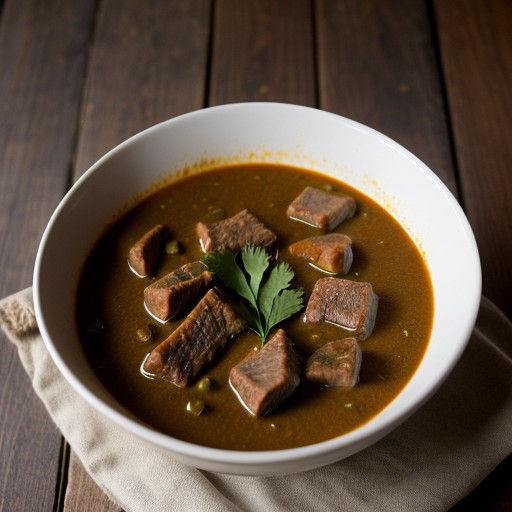
Achuete water (annatto water) provides the traditional golden-orange color. If you don't have achuete seeds, you can soak annatto powder in hot water or use a small amount of turmeric for color, though the flavor will differ slightly.
To make achuete water: Soak 1 tablespoon of achuete seeds in 1/2 cup of hot water for 30 minutes. Squeeze the seeds between your fingers to release the red pigment into the water, then strain and discard the seeds.
Toasted rice powder (bagoong mon) adds a subtle nutty depth and helps thicken the sauce. If unavailable, you can use plain peanut butter or a slurry of cornstarch and water, but the flavor will be less authentic.
Kare-Kare is best served immediately but can be stored in an airtight container in the refrigerator for up to 3 days. Reheat gently on the stove, adding a splash of water or broth if the sauce has thickened too much.
For a richer version, you can substitute half the water with coconut milk during the simmering stage.
Always serve with bagoong (shrimp paste) on the side; the salty, savory punch balances the sweet, nutty richness of the peanut sauce perfectly.
Keywords:
kare-kare, filipino, peanut stew, pork hocks, oxtail, asian cuisine, comfort food, eggplant, green beans, achuete, bagoong, toasted rice, simmered meat, vegetable stew, nutty sauce, shrimp paste, family meal, slow cooked, rich flavor, traditional recipe