Servings 6
- Amount Per Serving
- % Daily Value *
- Total Fat 0.5g1%
- Saturated Fat 0.2g1%
- Cholesterol 0.0mg0%
- Sodium 1.6mg1%
- Total Carbohydrate 44.8g15%
- Dietary Fiber 0.6g3%
- Sugars 0.0g
- Protein 4.3g9%
* Percent Daily Values are based on a 2,000 calorie diet. Your daily value may be higher or lower depending on your calorie needs.
Note
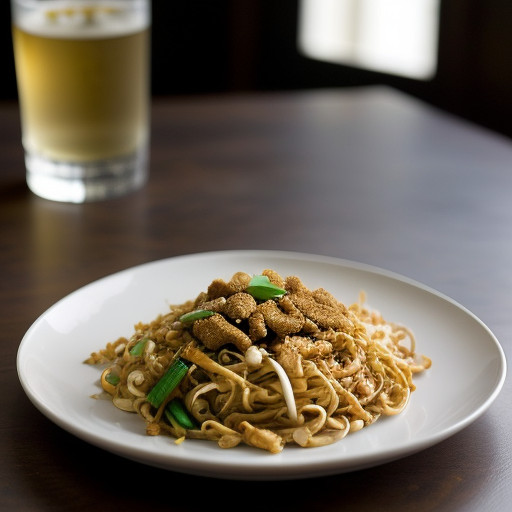
Chantaboon rice sticks are traditional flat rice noodles often used in Pad Thai. They may also be spelled "Jantaboon." If unavailable, standard flat rice noodles work as a substitute.
This recipe is versatile. While it lists pork, beef, chicken, or shrimp, you can easily use firm tofu for a vegetarian option. If using tofu, press it between paper towels with a weight on top for 20 minutes to remove excess moisture before frying.
The "Chai Po" or salted radish adds a unique savory crunch. It is typically sold in flat, transparent plastic containers and has a slightly orange hue.
Bean sprouts are best served cold on the side or as a fresh topping to maintain their crunch. Squeeze fresh lime juice over the dish just before eating to brighten the flavors.
Pad Thai is best enjoyed fresh as the noodles continue to absorb sauce and can become mushy if stored. If leftovers occur, store in an airtight container in the refrigerator for up to 2 days and reheat gently with a splash of water.
Keywords:
pad thai, thai food, rice noodles, stir fry, tamarind, bean sprouts, peanuts, lime, garlic, chili, fish sauce, asian cuisine, quick dinner, street food, wok, savory, sweet and sour, tofu, shrimp, chicken