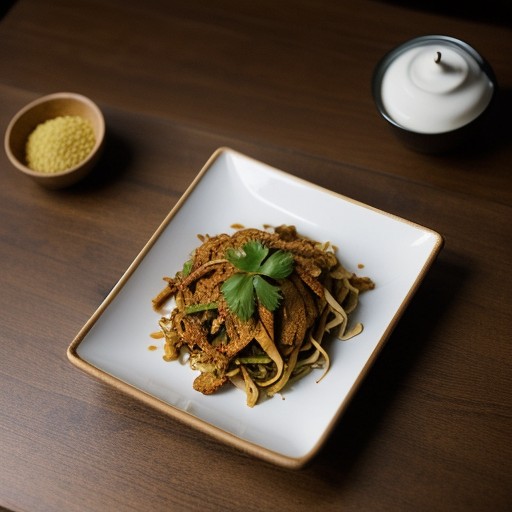
Servings 6
- Amount Per Serving
- % Daily Value *
- Total Fat 22g34%
- Saturated Fat 4g20%
- Cholesterol 120mg40%
- Sodium 800mg34%
- Total Carbohydrate 50g17%
- Dietary Fiber 3g12%
- Sugars 12g
- Protein 25g50%
* Percent Daily Values are based on a 2,000 calorie diet. Your daily value may be higher or lower depending on your calorie needs.
Note
For a vegan version, substitute fish sauce with soy sauce or tamari and use vegetable broth instead of chicken stock if desired. Replace shrimp with extra tofu or mushrooms.
Traditional Pad Thai uses tamarind paste for the sour element. If using tamarind paste instead of lime juice and vinegar, adjust quantities to taste for the desired balance of sweet and sour.
Do not overcook the rice vermicelli noodles before stir-frying, as they will continue to cook in the hot wok. They should be pliable but still have a slight bite.
Keep the heat high during stir-frying to achieve the characteristic "wok hei" (breath of the wok) flavor. Work quickly to prevent the noodles from becoming mushy.
Serve immediately with extra lime wedges, crushed peanuts, and additional chili flakes on the side for customization.
Leftovers can be stored in an airtight container in the refrigerator for up to 2 days. Reheat gently in the wok with a splash of water to restore moisture.
Keywords:
pad thai, thai noodles, rice vermicelli, stir fry, tamarind sauce, chicken pad thai, shrimp pad thai, tofu, bean sprouts, lime juice, fish sauce, garlic chives, asian cuisine, wok cooking, sweet and sour, dinner recipe, quick meals, umami, spicy option, street food