Servings 6
- Amount Per Serving
- % Daily Value *
- Total Fat 0.0g0%
- Saturated Fat 0.0g0%
- Cholesterol 0.0mg0%
- Sodium 0.0mg0%
- Total Carbohydrate 0.0g0%
- Dietary Fiber 0.0g0%
- Sugars 0.0g
- Protein 0.0g0%
* Percent Daily Values are based on a 2,000 calorie diet. Your daily value may be higher or lower depending on your calorie needs.
Note
Dough Handling Tips: Keep the dough covered with a damp cloth or plastic wrap while working to prevent it from drying out. A dry dough will crack and not seal properly. If the dough becomes too stiff, add a teaspoon of water; if too sticky, add a little more flour.
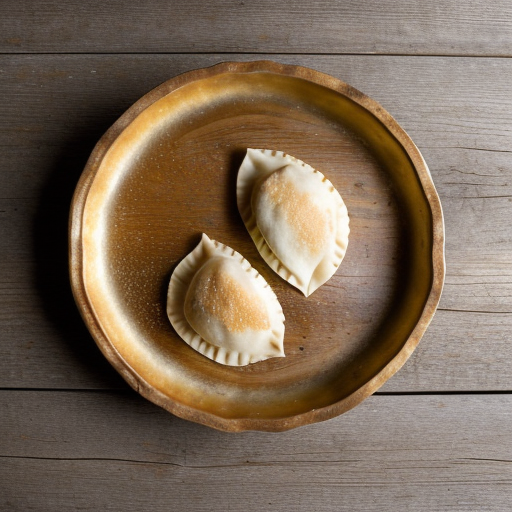
Efficient Assembly: For faster assembly, roll out a large circle of dough, place small mounds of filling evenly spaced apart, fold the dough over the mounds, and cut individual pierogi with a small biscuit cutter. This method helps maintain dough moisture and speeds up the process.
Cooking and Storage: Do not crowd the pot when boiling pierogi, as they may stick together. Cooked pierogi can be frozen after boiling for later use. To freeze, arrange boiled pierogi in a single layer on a baking sheet, freeze until solid, then transfer to a freezer bag. They keep well for up to 3 months.
Filling Variations:
Serving Suggestions: Pierogi are traditionally served with a pat of butter, a dollop of sour cream, or fried onions. For a richer flavor, pan-fry the boiled pierogi in butter until golden brown before serving.
Keywords:
pierogi, dumplings, eastern european, polish, dough, filling, boiled, fried, cottage cheese, mushrooms, sauerkraut, cabbage, prunes, handmade, comfort food, dinner, vegetarian, traditional, family meal