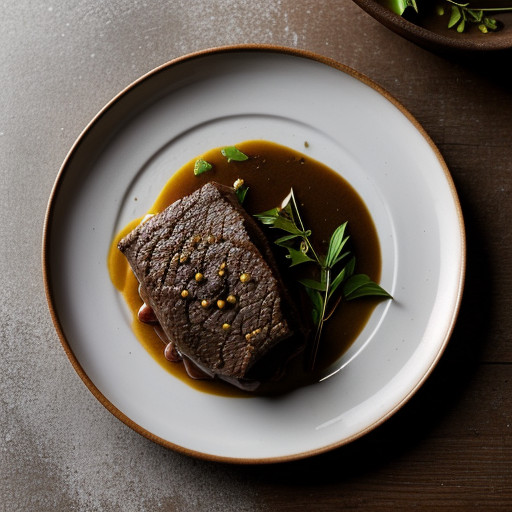
Servings 10
- Amount Per Serving
- % Daily Value *
- Total Fat 97.4g150%
- Saturated Fat 34.6g173%
- Cholesterol 370.0mg124%
- Sodium 2818.6mg118%
- Total Carbohydrate 151.3g51%
- Dietary Fiber 56.6g227%
- Sugars 6.8g
- Protein 149.0g298%
* Percent Daily Values are based on a 2,000 calorie diet. Your daily value may be higher or lower depending on your calorie needs.
Note
Marinating Time: For best results, marinate the beef for 4 to 5 days. The longer the marination, the more tender and flavorful the meat will be.
Non-Reactive Container: Use a glass, ceramic, or plastic container for marinating. Avoid metal bowls as the acid in the vinegar can react with the metal.
Sauce Consistency: If the sauce is too thick, add a little more water or broth. If too thin, simmer a bit longer or mix a teaspoon of flour with cold water and stir it in.
Sour Cream Temper: Ensure the cooking juices are simmering, not boiling, when you add the sour cream mixture to prevent curdling.
Storage: Leftover Sauerbraten tastes even better the next day as the flavors meld. Store in an airtight container in the refrigerator for up to 3 days. Reheat gently on the stovetop.
Gingersnaps: Traditional German recipes often use crushed ginger cookies (Lebkuchen or Gingersnaps) in the sauce for sweetness and spice. Do not skip this ingredient as it defines the flavor profile.
Meat Choice: While rump roast is traditional, bottom round or flank steak can also be used. Ensure the cut is suitable for slow braising.
Keywords:
sauerbraten, german, beef roast, rump roast, marinade, vinegar, gingersnaps, sour cream, braised beef, pot roast, cloves, bay leaf, peppercorns, gravy, traditional, slow cooked, tender beef, savory, tangy, holiday dinner, comfort food