Servings 4
- Amount Per Serving
- % Daily Value *
- Total Fat 7.3g12%
- Saturated Fat 2.0g10%
- Cholesterol 53.4mg18%
- Sodium 2508.8mg105%
- Total Carbohydrate 3.8g2%
- Dietary Fiber 0.8g4%
- Sugars 1.2g
- Protein 16.7g34%
* Percent Daily Values are based on a 2,000 calorie diet. Your daily value may be higher or lower depending on your calorie needs.
Note
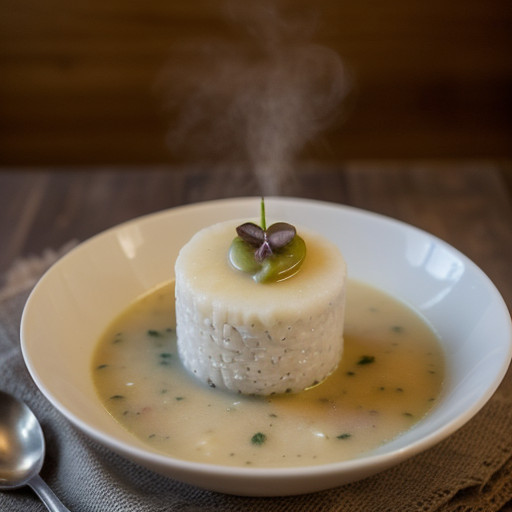
Zoni is traditionally eaten on New Year's Day in Japan. The mochi represents longevity, while the vegetables symbolize health and prosperity.
If you cannot find fresh yuzu, lemon or lime zest is an acceptable substitute for the citrus aroma.
Kamaboko is a Japanese fish cake. If unavailable, you may substitute with thin slices of smoked fish or even ham, though the flavor will differ.
Taro contains calcium oxalate crystals which can cause itching. Ensure it is fully cooked to neutralize this effect.
For a richer broth, you can add a small piece of kombu or bonito flakes when heating the final dashi.
The traditional serving order in some households is by age, starting with the eldest.
Keywords:
zoni, rice cake soup, japanese soup, mochi, dashi, new year, chicken soup, kamaboko, taro, vegetable soup, traditional, festive, comfort food, winter, shoyu, yuzu, spinach, carrot, fish cake, umami, home cooking