

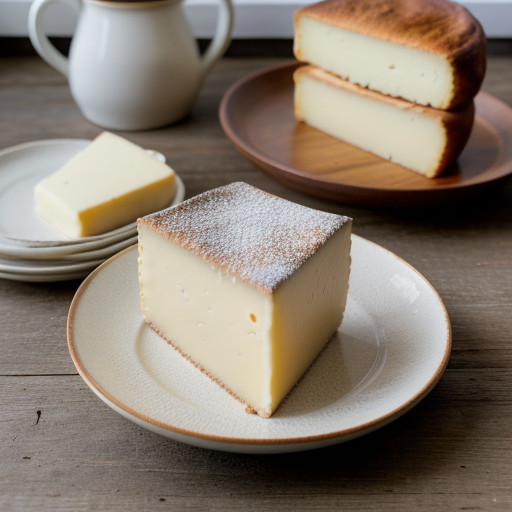
Polish Cheese Paska
Description
Polish Cheese Paska is a traditional, rich Easter bread that beautifully balances savory and sweet flavors. This dense, soft loaf features a dough infused with melted butter and yeast, creating a tender crumb that holds a generous filling of pressed farmer cheese, eggs, and plump raisins. The cheese filling provides a creamy, slightly salty contrast to the sugared, buttery bread. Perfect for holiday tables or special family gatherings, this recipe requires patience due to the long rising times, but the result is a comforting, aromatic centerpiece that tastes like homemade tradition.Ingredients
Directions
-
In a large bowl, cream the pressed dry farmers cheese with your hands until it is smooth and free of lumps.
-
Add 10 eggs to the cheese and mix well by hand until fully incorporated.
-
Dissolve 1 yeast cake in 1/2 cup of lukewarm water. Add this mixture to the cheese and egg blend.
-
Add 1 cup of flour to the mixture and blend well by hand.
-
Cover the bowl and let the cheese mixture stand overnight in a cool place or refrigerator.
-
The next day, beat the remaining 10 eggs in a large bowl. Add these beaten eggs to the cheese mixture and mix thoroughly.
-
Dissolve the second yeast cake in the remaining 1/2 cup of lukewarm water. Add this yeast mixture, along with the sugar and salt, to the bowl. Blend thoroughly by hand.
-
Gradually add the flour (approximately 12 to 17 cups total) to the mixture, working it in by hand until a dough forms.
-
Knead the dough for about 30 minutes or until it is smooth and elastic. Add more flour if necessary to reach a consistent texture.
-
Spread the cooled melted butter over the dough and knead for another 10 minutes until the butter is fully absorbed.
-
Add the raisins to the dough and knead until they are evenly distributed.
-
Cover the dough and let it rise in a warm place for about 2 hours, or until doubled in size.
-
Punch down the dough and let it rise again until doubled in size.
-
Divide the dough into 8 equal portions.
-
Shape each portion into a loaf, using a little flour on your hands to prevent sticking.
-
Place the shaped loaves into a greased round 1-1/2 quart casserole dish or loaf pan.
-
Let the loaves rise in the pan until they are doubled in size.
-
Bake at 350 degrees Fahrenheit (177°C) for 1 hour.
-
After 30 minutes of baking, cover the top with foil to prevent burning.
-
Continue baking for the remaining time until the bread is golden brown and cooked through.
Nutrition Facts
Servings 2 cups
- Amount Per Serving
- Calories 3610.0kcal
- % Daily Value *
- Total Fat 159.3g246%
- Saturated Fat 88.9g445%
- Cholesterol 1263.8mg422%
- Sodium 3079.3mg129%
- Total Carbohydrate 464.6g155%
- Dietary Fiber 12.5g50%
- Sugars 228.6g
- Protein 88.3g177%
* Percent Daily Values are based on a 2,000 calorie diet. Your daily value may be higher or lower depending on your calorie needs.
