

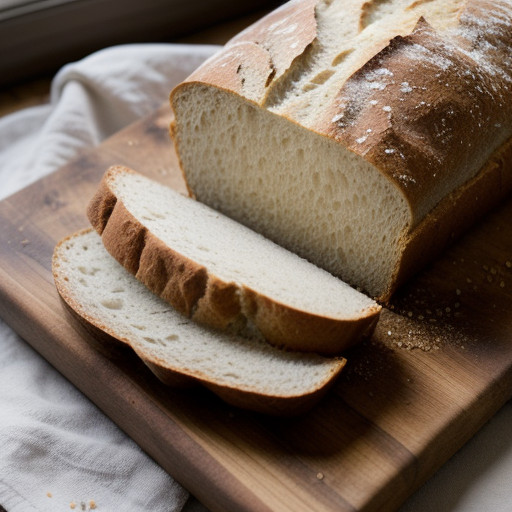
West Coast French Sourdough Bread I
Description
This West Coast French Sourdough Bread combines the tangy depth of a fermented starter with the reliability of commercial yeast for a perfectly balanced loaf. The result is a bread with a crisp, dark crust and a soft, airy crumb that holds up beautifully to slicing. It features a traditional sponge method, allowing the dough to develop robust flavor overnight. Ideal for breakfast toast, sandwich bread, or simply served with olive oil and sea salt, this vegan-friendly recipe delivers restaurant-quality results at home.Directions
-
In a mixing bowl, combine the active sourdough starter, water, and bread flour. Beat thoroughly until smooth.
-
Cover the bowl tightly with plastic wrap and let it rise in a warm place (80-85°F) overnight.
-
The next morning, beat the risen starter thoroughly. Measure out 1 cup for the recipe and return the remaining starter to your storage jar.
-
In a separate large bowl, pour the warm water. Stir in the sugar and sprinkle the dry yeast on top. Let stand until the yeast dissolves and becomes frothy.
-
Add the reserved 1 cup of starter and 3 cups of bread flour to the yeast mixture. Beat thoroughly until combined.
-
Cover the bowl tightly and let the dough stand in a warm place for 1 to 1.5 hours, or until very light and foamy.
-
Sift together the salt, baking soda, and 1 cup of bread flour. Spread the remaining 1 cup of bread flour on a pastry board.
-
Stir the sifted flour mixture into the foamy dough sponge.
-
Turn the dough out onto the floured board. Knead for several minutes, adding a little more flour if necessary, to form a very stiff, smooth, and non-sticky dough.
-
Divide the dough in half and shape into either round boules or long narrow baguettes.
-
Place the shaped loaves on a flat baking sheet (preferably non-stick, lightly greased, or sprinkled with cornmeal).
-
Slip the baking sheet into a large plastic bag, supporting the bag so it does not touch the dough (e.g., using drinking glasses at each end). Let rise in a warm place for 1 to 1.5 hours.
-
Preheat the oven to 400°F (204°C). Place a pan of hot water on the oven floor to create steam.
-
Brush the tops of the loaves with cold water. Use a sharp razor blade or scissors to make diagonal slashes across long loaves or radiating cuts from the center of round loaves.
-
Bake for 50 to 60 minutes, or until the crust is dark and desired crispness is achieved.
-
About 10 minutes before the end of baking, brush the tops with water again to enhance crust formation.
-
Remove from the oven and stand the loaves on their edges to cool completely, propping them against a heavy object to prevent flattening.
Nutrition Facts
Servings 1 cups
- Amount Per Serving
- Calories 220kcal
- % Daily Value *
- Total Fat 1.5g3%
- Saturated Fat 0.2g1%
- Sodium 350mg15%
- Total Carbohydrate 45g15%
- Dietary Fiber 2g8%
- Sugars 1g
- Protein 8g16%
* Percent Daily Values are based on a 2,000 calorie diet. Your daily value may be higher or lower depending on your calorie needs.
