

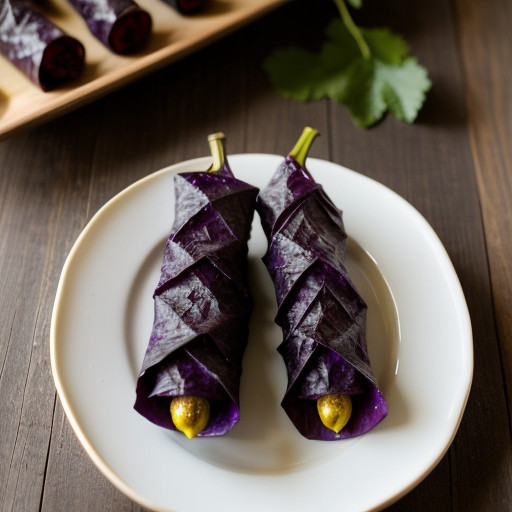
Yalanchi Sarna (Stuffed Grape Leaves)
Description
Yalanchi Sarna, or stuffed grape leaves, is a timeless Mediterranean delicacy that balances earthy, tangy, and herbal flavors. This recipe features tender preserved grape leaves wrapped around a fragrant filling of cooked rice, fresh parsley, tomatoes, and aromatic spices like allspice and dried mint. The addition of lemon juice provides a bright acidity that cuts through the richness, creating a harmonious bite. Perfect for sharing as an appetizer or a light main course, these dolmas are ideal for potlucks, family gatherings, or a sophisticated vegetarian meal. The slow simmering process ensures the rice becomes fluffy while absorbing the savory juices, resulting in a dish that is both comforting and elegant. Serve warm or at room temperature for the best texture and flavor experience.Ingredients
Directions
-
Bring a quart of water to a boil in a medium saucepan.
-
Remove the pan from heat and add the preserved grape leaves to the hot water.
-
Let the grape leaves sit in the hot water for 10 minutes to soften, then remove and set aside.
-
In a medium bowl, combine the cooked rice, grated onion, minced parsley, chopped tomatoes, dried mint, allspice, and minced garlic.
-
Mix the ingredients thoroughly to ensure the spices and herbs are evenly distributed throughout the rice.
-
Lay a grape leaf flat on a clean surface, stem side facing you and smooth side up.
-
Place a small amount of the rice mixture in the center of the leaf.
-
Fold the bottom of the leaf up over the filling, then fold the sides inward.
-
Roll the leaf tightly into a cylinder shape.
-
Line the bottom of a large saucepan with a few plain grape leaves to prevent sticking.
-
Arrange the rolled grape leaves seam-side down in the pot, packing them tightly together.
-
Sprinkle the lemon juice evenly over the rolled leaves.
-
Add enough water to the pot to just cover the rolled grape leaves.
-
Place an oven-proof plate on top of the rolls to keep them submerged and prevent unrolling during cooking.
-
Cover the pot and bring the liquid to a boil over high heat.
-
Reduce the heat to low and simmer gently for 45 to 60 minutes, or until most of the water is absorbed and the rice is tender.
-
Remove from heat and let the pot sit, covered, for 1 hour before serving to allow the flavors to meld.
Nutrition Facts
Servings 4
- Amount Per Serving
- Calories 626.0kcal
- % Daily Value *
- Total Fat 16.0g25%
- Saturated Fat 2.6g13%
- Cholesterol 0.0mg0%
- Sodium 34.0mg2%
- Total Carbohydrate 150.0g50%
- Dietary Fiber 52.0g208%
- Sugars 0.0g
- Protein 15.2g31%
* Percent Daily Values are based on a 2,000 calorie diet. Your daily value may be higher or lower depending on your calorie needs.
Note
Storage: Store leftover stuffed grape leaves in an airtight container in the refrigerator for up to 3 days. They can also be frozen for longer storage.
Substitutions: Fresh grape leaves can be used instead of preserved ones; if using fresh, blanch them in boiling water for 2-3 minutes before rolling.
Variations: Add pine nuts or currants to the rice mixture for a sweet and savory twist. For a non-vegan version, mix ground lamb or beef into the rice.
Tips: Ensure the rolls are tight but not too tight, as the rice will expand slightly during cooking. The plate on top is crucial to keep the structure intact.
Serving: Serve warm or at room temperature. A drizzle of extra virgin olive oil or a side of yogurt sauce complements the dish well.
