

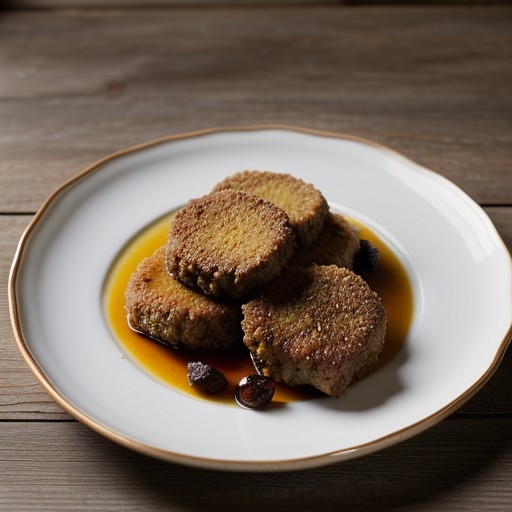
VITELLINA FRICTA (Fried Veal)
Description
Experience the bold, contrasting flavors of Ancient Rome with this historic Vitellina Fricta. This dish transforms tender veal into a luxurious main course by pairing it with a complex sauce of sweet raisins, tangy vinegar, and aromatic spices. The meat is first fried to develop a golden crust, then simmered in a reduction of wine, honey, and the distinctive salty depth of Liquamen. The result is a harmonious balance of sweet, sour, and savory notes that would have delighted emperors. Perfect for a dinner party seeking historical intrigue, this recipe offers a glimpse into classical cuisine with its unique spice blend of celery seed, cumin, and oregano. It’s an adventurous yet approachable way to bring ancient culinary traditions to your modern table.Ingredients
Directions
-
Cut the veal into appropriate serving portions and pat dry.
-
Heat oil in a large skillet or pan over medium-high heat.
-
Fry the veal pieces until well done and golden brown on all sides. Remove meat from the pan and set aside.
-
In a separate pan, combine the raisins, wine, vinegar, honey, oil, Liquamen (or salt), and all spices (pepper, celery seeds, Liebstoeckl, cumin, oregano, dried onion).
-
Bring the sauce mixture to a boil and let it simmer briefly to meld the flavors.
-
Return the fried veal to the pan or transfer to a serving dish.
-
Pour the hot raisin sauce over the veal.
-
Let the meat rest in the sauce for 10 minutes to absorb the flavors, then finish cooking on low heat if desired before serving.
Note
Defritum is a sweet sauce made from reduced wine, often with honey or dates. If unavailable, you can substitute with a mixture of red wine reduction and honey.
Liquamen is a fermented fish sauce similar to modern fish sauce or Worcestershire sauce. If using salt instead, reduce the amount slightly and consider adding a dash of fish sauce for authenticity.
Liebstockl (Levisticum officinale) is also known as lovage. If unavailable, celery leaves or seeds can be used as a substitute.
This dish pairs well with crusty bread to soak up the flavorful sauce.
ancient roman, historical recipe, veal, raisin sauce, liquamen, roman cuisine, apicius, historical cooking, medieval food, classical antiquity, spiced meat, wine reduction, sweet and sour, traditional dish
