

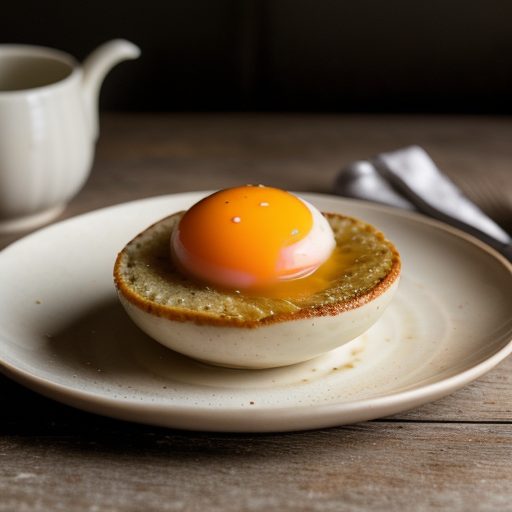
Egg Recipe
Description
This recipe details the preparation of soft-cooked, or jellied, eggs, which are tender and digestible. The eggs are cooked in hot water off the heat to achieve a consistent jelly-like texture throughout. They are best served immediately in heated egg cups or small dishes to maintain warmth and appeal.Ingredients
Directions
-
they are cooked.
-
One point, however, that should never be overlooked, so far as eggs that are to be served hot is concerned, is that they should be served immediately upon being prepared, so that they will not have an opportunity to become
-
cool before being eaten.
-
This applies particularly to any spongy mixture, such as puff omelet and souffle, as these dishes shrink upon standing and become less appetizing in both appearance and texture.
-
Several ways of serving soft-cooked eggs are in practice, but probably the most satisfactory way is to
-
serve them in egg cups.
-
In case cups are used, they should be heated before being placed on the table, as the
-
heat that they retain helps to keep the eggs warm.
-
The eggs may be removed from the shell into the cup and eaten from the cup, or the unbroken egg may be placed point downwards in the small end of the cup, a small piece broken from the broad end of the shell, and the egg then eaten from the shell through the opening made in it.
-
If egg cups are not available, the eggs may be removed from the shell and served in small dessert dishes, which also should be heated.
-
Many egg dishes are made more attractive and appetizing by means of a garnish of some kind.
-
Small strips or triangular pieces of toast, sprays of parsley, celery leaves, lettuce, and strips of pimiento are very satisfactory for this purpose.
-
If no other garnish is desired, just a sprinkling of paprika adds a touch of color.
-
they have a tendency to adhere to china and to discolor silver.
-
Therefore, in the washing of china and the cleaning of silver that have been used in the serving of raw or slightly cooked eggs, much care should be exercised.
-
Dishes in which eggs of this kind have been served should first be washed in
-
cool water in order to
-
remove all the egg, and then they should be thoroughly washed in hot water.
-
If the hot water is applied first, the heat will cause the egg to coagulate and cling to the dishes.
-
Silver that comes in contact with eggs tarnishes or becomes discolored through the action of the sulphur that is found in them, just as it does when it is exposed to the air.
-
Dark spots that appear on silver from this source may be removed by means of a good mentioned, as well as many other egg dishes, a number of recipes are here given.
-
These recipes pertain to the cooking of eggs alone in various ways or to dishes in which eggs are the leading ingredient.
-
There are, of course, numerous other dishes in which eggs are required, such as custards, cakes, mayonnaise, etc., but these are omitted here, as recipes for them are included in the lessons that pertain directly to them.
-
In the first few recipes, the ingredients are omitted and merely directions given, for the eggs themselves are practically the only thing required, especially so far as the cooking is concerned.
-
However, in the majority of cases, the ingredients are listed in the usual manner and explicit directions then given for carrying out the recipe.
-
jellied, may be used for any meal in which plain eggs can be served.
-
When properly prepared, they are both digestible and attractive, and any person who is able to eat eggs at all can eat them in this
-
form .
-
prepare soft-cooked, or jellied, eggs, first bring to the boiling point sufficient water to
-
cover well the desired number of eggs, which is usually 1 pint of water to each egg.
-
Then drop the eggs into the water carefully,
-
remove the pan from the fire,
-
place a
-
cover on it, and
-
set it on the back of the stove, where the water will not
-
heat further nor
-
cool too rapidly.
-
Allow the eggs to remain in the water for When eggs cooked in this manner are served, they will be found to be the consistency of jelly all the way through.
-
This method of cooking is preferable to boiling them for 3, 4, or 5 minutes, because boiling cooks the white just inside the shell very hard, while the yolk of the egg
Nutrition Facts
Servings 1 serving
- Amount Per Serving
- Calories 3603.8kcal
- % Daily Value *
- Total Fat 255.8g394%
- Saturated Fat 76.7g384%
- Cholesterol 8672.2mg2891%
- Sodium 2883.0mg121%
- Total Carbohydrate 25.6g9%
- Dietary Fiber 0.0g0%
- Sugars 25.6g
- Protein 302.2g605%
* Percent Daily Values are based on a 2,000 calorie diet. Your daily value may be higher or lower depending on your calorie needs.
already, american, are, boiling, connection, cooked, course, depends, dessert, dishes, egg, eggs, eggseggs, enable, housewife, jellied, manner, many, minutes, note
