

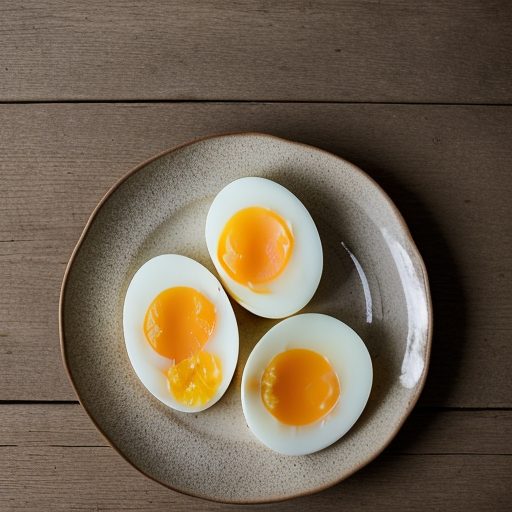
Egg Quality Assessment Guide
Description
This guide provides detailed instructions on how to evaluate the quality of eggs using visual, tactile, and physical tests. It covers understanding market grades, checking for bloom on the shell, and performing the water float test to determine freshness. Essential knowledge for home cooks to ensure they are using the best ingredients for baking and cooking.Ingredients
Directions
-
Understand that the natural quality of eggs depends largely on the food of the hens and their conditions of living. The selection, breeding, and care of fowls have developed into a science, particularly since the production of eggs has grown into an industry.
-
Recognize that freshness is the primary point on which the quality of eggs depends. Various agencies, such as molds and bacteria, can render quality inferior if eggs are improperly cared for or contaminated. These bacteria are responsible for unpleasant flavors in bad eggs.
-
To prevent decay, protect the shell. If bacteria have entered, eggs become unfit for use quickly unless growth is prevented by storing them at a temperature that keeps bacteria dormant or inert.
-
Note that while eggs may not actually spoil for a long time, they are affected by storage covering several months. A key indicator of staleness is the increase in the air space at the broad end of the egg, as water evaporates through the porous shell.
-
Be aware that stale eggs, even if not spoiled, will not produce good results in cooking, especially for leavening. It is impossible to produce desired results with eggs that have undergone significant change, even if odor and flavor do not indicate spoilage.
-
When purchasing eggs, be familiar with trade names and their meanings. Large distributors grade eggs based on points for color, size, freshness, and appearance. Grades include extra fancy (90 points), fancy (80 points), strictly fresh (70 points), and cooking eggs (60 points).
-
Judge market quality by trade name, price, and the condition of the shell surface. Freshly laid eggs have a coating called bloom, which feels like a thin lime coating. This coating makes the egg fresh and germ-proof. If the bloom is gone, the egg may still be good, but it is less protected.
-
For best quality, select medium-sized eggs that are uniform in size and color. The shape should be a comparatively long oval, with one blunt end and the other a sharp curve.
-
At home, apply simple tests for freshness. One indefinite test is to shake the egg. As water evaporates, the yolk and white shrink, allowing them to move when shaken. The staler the egg, the more pronounced the movement. Use this test only immediately before use, as shaking can disturb the membrane and spiral cords holding the yolk.
-
If the membrane is broken, the yolk may settle and adhere to the shell if stored. A more effective test is the water float test. Place the eggs in a glass containing water.
-
A perfectly fresh egg will sink to the bottom. If the egg is about 3 weeks old, the broad end will rise slightly. If an egg floats, it is likely stale and should be discarded.
egg quality, freshness test, candling, water test, egg grading, shell bloom, food safety, cooking tips, egg storage, market selection
