

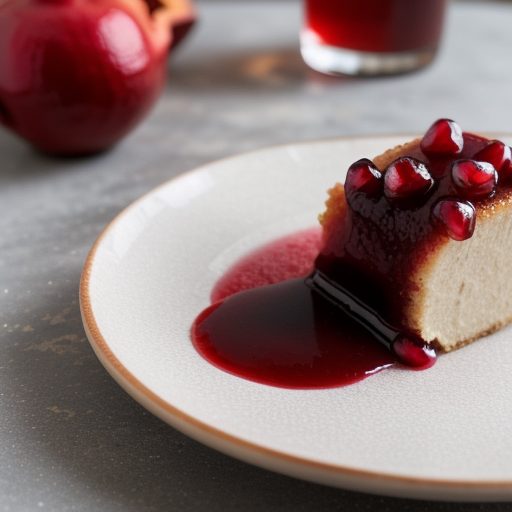
This classic grenadine syrup captures the vibrant, tart-sweet essence of fresh pomegranates. Unlike commercial versions loaded with artificial coloring, this homemade recipe relies on the natural ruby hue and complex flavor of real fruit. The process involves macerating the seeds with sugar to draw out the juice, followed by a careful reduction to concentrate the flavors. The result is a luxurious, velvety syrup perfect for enhancing Shirley Temples, daiquiris, and lemonades. It also adds a beautiful swirl and depth to yogurt parfaits or drizzled over pancakes. Making your own allows you to control the sweetness and enjoy the authentic taste of the season’s best fruit.
Grenadine (Pomegranate Syrup)
Description
This classic grenadine syrup captures the vibrant, tart-sweet essence of fresh pomegranates. Unlike commercial versions loaded with artificial coloring, this homemade recipe relies on the natural ruby hue and complex flavor of real fruit. The process involves macerating the seeds with sugar to draw out the juice, followed by a careful reduction to concentrate the flavors. The result is a luxurious, velvety syrup perfect for enhancing Shirley Temples, daiquiris, and lemonades. It also adds a beautiful swirl and depth to yogurt parfaits or drizzled over pancakes. Making your own allows you to control the sweetness and enjoy the authentic taste of the season's best fruit.Ingredients
Directions
-
Select firm pomegranates without brown spots on the blossom end, then cut them open crosswise and pry out the crimson seeds, ensuring no bitter white pith is included.
-
Place approximately two cups of seeds in a food processor or blender with the sugar and water, and pulse briefly to create a rough puree, breaking the membranes without making a smooth mixture.
-
Transfer the puree to an earthenware or glass bowl, cover with a cloth, and let stand at room temperature for 3 days, stirring daily (refrigerate after 24 hours if weather is extremely hot).
-
Line a sieve with dampened fine nylon net or two layers of damp cheesecloth and set it over a nonreactive saucepan.
-
Pour the macerated puree into the sieve and allow the juice to drip through without pressing on the pulp; this may take several hours, so tie the cloth into a bag and suspend it over the pot if the flow slows.
-
Discard the seedy pulp once all juice has drained.
-
Bring the strained syrup to a bare simmer (180&# 194;°F) over medium-low heat, then reduce heat to very low and scald for 3 minutes, keeping the temperature below 200ðF (93ðC) using a candy thermometer.
-
Skim off any foam that forms during heating.
-
Funnel the hot syrup into a sterilized, dry bottle or jar.
-
For refrigerated storage, let the syrup cool completely before capping with a new cork or lid.
-
For pantry storage, funnel hot syrup into clean half-pint canning jars, seal with new two-piece lids, and process in a boiling-water bath at simmering temperature (190ðF) for 15 minutes.
-
Cool the jars, label, and store.
Nutrition Facts
Servings 2
- Amount Per Serving
- Calories 580.5kcal
- % Daily Value *
- Total Fat 0.0g0%
- Saturated Fat 0.0g0%
- Cholesterol 0.0mg0%
- Sodium 1.5mg1%
- Total Carbohydrate 150.0g50%
- Dietary Fiber 0.0g0%
- Sugars 150.0g
- Protein 0.0g0%
* Percent Daily Values are based on a 2,000 calorie diet. Your daily value may be higher or lower depending on your calorie needs.
Note
When choosing pomegranates, reject any with a brownish area on the blossom end, as this indicates spoilage and off-flavors.
Be careful not to include fragments of the cottony white pulp in which the seeds are embedded, as it is bitter.
If the weather is extremely hot during the maceration process, refrigerate the puree after 24 hours to prevent fermentation.
You can speed up the straining process by tying the cheesecloth lining of the sieve into a bag and suspending it above the pot after the initial flow of juice has slowed down.
Use a candy/jelly thermometer to monitor temperature carefully; keeping it below 200ðF ensures the syrup retains its fresh flavor without caramelizing too much.
For refrigerated storage, use a new cork only. The syrup keeps in the refrigerator for at least a year.
For pantry storage, follow standard canning procedures: use hot, clean jars and process in a boiling-water bath at simmering temperature (190ðF) for 15 minutes.
