

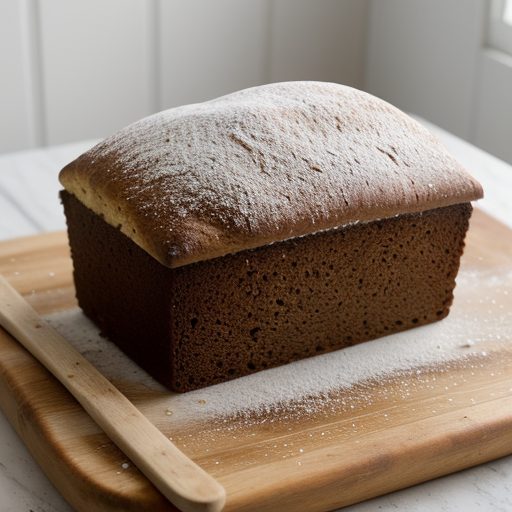
Hungarian Christmas Bread
Description
This Hungarian Christmas Bread is a cherished holiday tradition, featuring a soft, buttery dough wrapped around a rich filling of ground poppy seeds, raisins, and sugar. The contrast between the tender, slightly sweet bread and the nutty, dense filling creates a complex flavor profile that is both comforting and celebratory. The subtle hint of lemon zest brightens the richness, making it perfect for sharing during the festive season. Best enjoyed fresh from the oven or lightly toasted the next day with a cup of tea or coffee, this bread brings a taste of Eastern European heritage to your table. It requires patience for rising and filling preparation, but the result is a beautiful, aromatic centerpiece for any Christmas meal.Directions
-
In a small cup or bowl, dissolve the yeast and 1 teaspoon sugar in the warm water. Let stand for about 5-10 minutes until foamy.
-
In a large mixing bowl, cream together the butter, 1/4 cup sugar, salt, 1 tablespoon lemon peel, and nonfat dry milk until smooth.
-
Add the yeast mixture to the butter mixture. Gradually add 2 1/2 cups of flour, mixing well after each addition until a soft dough forms.
-
Turn the dough out onto a lightly floured surface. Knead for about 10 minutes, adding more flour as needed, until the dough is smooth, elastic, and not sticky.
-
Place the dough in a greased bowl, turning once to coat the top with grease. Cover and let rise in a warm, draft-free place until doubled in bulk, about 1 hour.
-
While the dough rises, prepare the filling. Combine the ground poppy seeds, remaining sugar, raisins, milk, and remaining lemon peel in the top half of a double boiler.
-
Cook the filling over simmering water, stirring constantly, until it thickens to a spreading consistency, about 10-15 minutes. Remove from heat and cool completely to room temperature.
-
Punch down the risen dough. Divide in half and roll each piece on a floured surface into a long rectangle about 1/4 inch thick.
-
Spread the cooled poppy seed filling evenly over each rectangle. Roll up each rectangle tightly from the long side. Pinch the seams and ends firmly to seal.
-
Place the rolls on a large greased baking sheet. Brush with the egg wash (beaten egg mixed with 1 teaspoon water).
-
Cover loosely with wax paper supported by glasses so it doesn't touch the dough. Let rise again for 30 minutes.
-
Preheat the oven to 325°F (165°C).
-
Apply a second coat of egg glaze to the loaves. Bake for about 1 hour, or until golden brown. If the tops brown too quickly, cover loosely with aluminum foil.
-
Cool completely on a wire rack before slicing.
Nutrition Facts
Servings 4 cups
- Amount Per Serving
- Calories 1162.5kcal
- % Daily Value *
- Total Fat 99.1g153%
- Saturated Fat 61.7g309%
- Cholesterol 258.6mg87%
- Sodium 5924.0mg247%
- Total Carbohydrate 67.7g23%
- Dietary Fiber 3.4g14%
- Sugars 34.7g
- Protein 7.3g15%
* Percent Daily Values are based on a 2,000 calorie diet. Your daily value may be higher or lower depending on your calorie needs.
hungarian, christmas bread, poppy seed, yeast bread, eastern european, festive baking, raisins, lemon zest, holiday dessert, filled bread, vegetarian, comfort food, baking, holiday tradition, sweet bread, poppy seed filling, christmas baking, family recipe
