

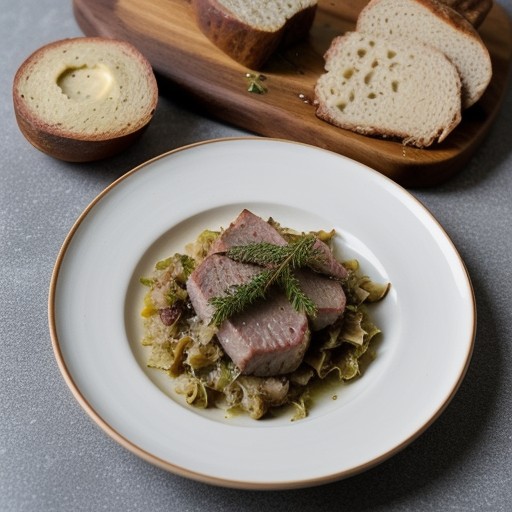
Choucroute Garnie
Description
This classic Alsatian dish is a celebration of comfort food at its finest. The sauerkraut is gently simmered with bacon, onions, carrots, and a bouquet of juniper berries and bay leaves until it absorbs the deep, savory flavors of beef bouillon and dry white wine. The true star, however, is the array of sausages and smoked pork butt, each cooked to perfection to ensure tenderness without drying out. The result is a tangy, hearty, and incredibly satisfying meal that brings warmth to the table. Ideal for cold winter evenings or festive gatherings with friends and family, Choucroute Garnie offers a complex texture profile with the crunch of kraut contrasting against the soft, juicy meats. It’s a labor of love that rewards patience with an unforgettable, rustic dining experience.Ingredients
Directions
-
Drain the sauerkraut. Place in a large bowl and cover with cold water. Soak for 20 minutes, changing the water twice. Drain again.
-
Take up large handfuls of the sauerkraut and squeeze out as much water as possible. Set aside.
-
Remove the rind from the bacon and cut into strips about two inches long and one half inch wide. Blanch bacon by placing in a saucepan and covering with two quarts of cold water. Bring to a boil, then simmer for 10 minutes. Drain.
-
Melt the butter in a large casserole dish (2.5 to 3 quarts). Add the blanched bacon, carrots, and onion. Cook slowly, covered, for 10 minutes. Do not let the vegetables brown.
-
Stir in the sauerkraut, breaking up any clumps. Cover and cook on the stovetop slowly for 10 minutes.
-
Preheat the oven to 325°F. Tie the parsley, bay leaf, peppercorns, and juniper berries in cheesecloth to create a bouquet garni. Bury the bouquet in the sauerkraut.
-
Pour in the beef bouillon, water, dry white wine, and gin (if using). Add salt to taste. Continue cooking on the stovetop until it comes to a boil.
-
Place the covered casserole in the oven and cook for 4 hours. Check periodically to ensure the sauerkraut is not too dry; if all liquid has evaporated, add a little more bouillon or wine. The sauerkraut should just bubble.
-
Two and a half hours before serving, place the smoked pork butt in a pot, cover with cold water, and bring to a boil. Reduce heat and simmer, covered, for 2 hours.
-
One hour before serving, place the kielbasa in a large pot with enough cold water to cover. Bring to a boil, then simmer, covered, for 20 minutes.
-
Add the knockwurst and smoked bratwurst to the kielbasa pot. Bring to a boil again, then simmer for 10 minutes.
-
Add the veal sausages and simmer for 5 minutes longer. Turn off the heat and let stand for 5 minutes more.
-
Remove the herb bouquet from the sauerkraut before transferring the choucroute to a serving platter. Arrange the meats alongside or on top of the sauerkraut.
Note
Storage: Leftovers can be stored in the refrigerator for up to 3 days. Reheat gently on the stovetop with a splash of water or wine.
Substitutions: If you cannot find juniper berries, the suggested gin addition works well to mimic the flavor profile. You can also adjust the variety of sausages based on availability, ensuring a mix of smoked and fresh meats.
Tips: Soaking the sauerkraut is crucial to reduce excessive saltiness and soften the texture. Do not skip the blanching of the bacon to remove excess impurities and fat.
Variations: Some regional variations include potatoes simmered directly in the sauerkraut liquid during the last hour of cooking.
choucroute, sauerkraut, alsatian, french, german, sausage, smoked pork, wine, juniper, comfort food, braised, winter, festive, hearty, traditional, kielbasa, bratwurst, meal, dinner, slow cooked
