

This recipe creates a foundational yeast starter, often called a “friendship starter,” which bridges the gap between commercial yeast and traditional wild sourdough. By combining active dry yeast, warm water, flour, sugar, and salt, you cultivate a lively, bubbly mixture that enhances the flavor of your homemade breads. The process requires patience, as the starter ferments at room temperature for several days, developing a pleasant yeasty aroma. It is an excellent project for bakers looking to improve their dough’s texture and taste without maintaining a permanent wild culture. Once active, a portion can be used immediately for baking, while the rest is refreshed and stored in the refrigerator for future use within ten days.
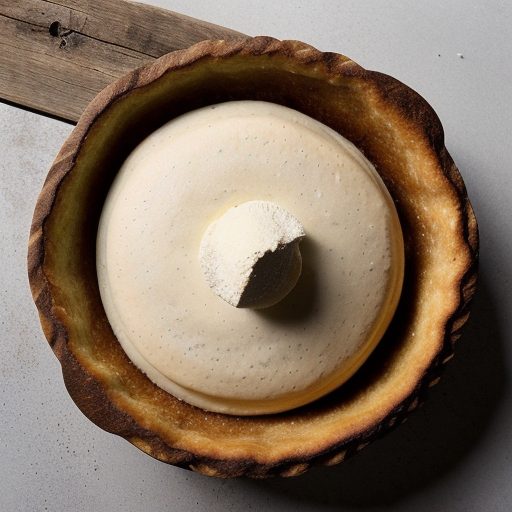
Friendship Starter – Sour Dough
Description
This recipe creates a foundational yeast starter, often called a "friendship starter," which bridges the gap between commercial yeast and traditional wild sourdough. By combining active dry yeast, warm water, flour, sugar, and salt, you cultivate a lively, bubbly mixture that enhances the flavor of your homemade breads. The process requires patience, as the starter ferments at room temperature for several days, developing a pleasant yeasty aroma. It is an excellent project for bakers looking to improve their dough's texture and taste without maintaining a permanent wild culture. Once active, a portion can be used immediately for baking, while the rest is refreshed and stored in the refrigerator for future use within ten days.Ingredients
Directions
-
In a small bowl, dissolve the dry yeast in 1/2 cup of warm water.
-
Add 2 cups of lukewarm water, sifted flour, salt, and sugar to the yeast mixture.
-
Stir the mixture until it is completely smooth and free of lumps.
-
Let the mixture stand uncovered at room temperature for 3 to 5 days.
-
Stir the starter two or three times each day to aerate it.
-
Cover the starter with a lid or cloth at night.
-
Check the starter when ready; it should smell yeasty but not sour.
-
Pour out 1 cup of the starter to use in your bread recipe.
-
To preserve the remaining starter, add 1/2 cup water, 1/2 cup flour, and 1 teaspoon sugar to the leftover mixture.
-
Let the refreshed starter stand for at least one day until it is bubbly and well-fermented.
-
Store the starter in the refrigerator, covered, for up to ten days.
Nutrition Facts
Servings 1
- Amount Per Serving
- Calories 531.0kcal
- % Daily Value *
- Total Fat 2.0g4%
- Saturated Fat 0.4g2%
- Cholesterol 0.0mg0%
- Sodium 5009.8mg209%
- Total Carbohydrate 111.1g38%
- Dietary Fiber 4.7g19%
- Sugars 4.2g
- Protein 14.5g29%
* Percent Daily Values are based on a 2,000 calorie diet. Your daily value may be higher or lower depending on your calorie needs.
Note
Store the starter in the refrigerator, covered, for up to ten days.
Use the starter within 10 days to make another friendship mixture or bake bread.
The starter is ready when it smells yeasty but not sour.
Stirring the starter daily helps maintain its activity and prevents a skin from forming on top.
