

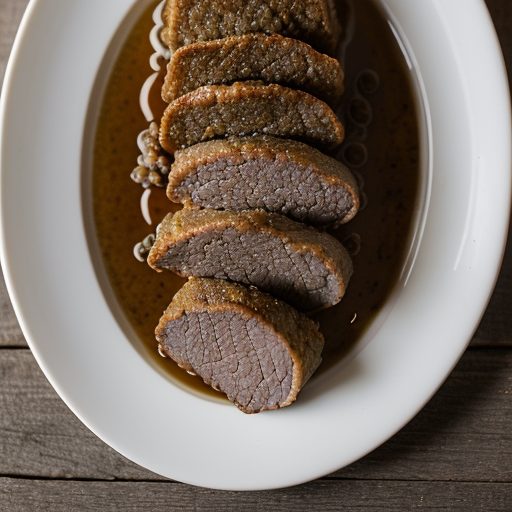
Haggis-Scotch-Canadian
Description
This Scotch-Canadian haggis is a hearty, protein-rich staple that blends the robust flavors of pork liver, rolled oats, and crispy cracklins. Originating from New Brunswick, this variation offers a comforting, dense texture with a savory, peppery kick. It is an excellent centerpiece for winter dinners or cultural celebrations, offering a rustic charm that feels both nostalgic and satisfying. The steaming process ensures the mixture holds together beautifully, while pan-frying the slices creates a delightful golden crust. Perfect for those who enjoy traditional, slow-cooked meats and grain-based dishes, this recipe brings a unique regional twist to a classic Scottish favorite.Ingredients
Directions
-
Cut the pork fat or salt pork into small cubes.
-
Fry the pork cubes in a large skillet over medium heat until golden brown and crisp, creating cracklins (also known as kips).
-
Pour off excess grease as it accumulates during frying.
-
Remove the cracklins from the pan, drain well on paper towels, and allow to cool completely.
-
Wash the pork liver thoroughly and place it in a large pot.
-
Cover the liver with boiling water and simmer for about 1 hour, or until a fork inserts easily into the meat.
-
Remove the liver from the pot and allow it to cool enough to handle.
-
Reserve the cooking liquid from the liver.
-
Grind the cooled liver and approximately 2 cups of the prepared cracklins through a food grinder or process in a food processor until finely chopped.
-
In a large mixing bowl, combine the ground liver and cracklins.
-
Stir in the rolled oats, salt, and pepper.
-
Gradually add enough of the reserved cooking liquid to bind the mixture together, ensuring it holds its shape but remains moist.
-
Grease a 9x5x3 inch loaf pan.
-
Press the haggis mixture firmly into the prepared loaf pan.
-
Cover the pan tightly with waxed paper and then with aluminum foil.
-
Steam the loaf for 1 hour, ensuring the water in the steamer does not boil over into the pan.
-
Remove from heat and allow the haggis to cool completely in the pan.
-
Once cooled, remove the loaf from the pan and slice into 1/2-inch thick pieces.
-
Pan-fry the slices in a little oil until golden brown on both sides.
Nutrition Facts
Servings 8
- Amount Per Serving
- Calories 1235.4kcal
- % Daily Value *
- Total Fat 51.7g80%
- Saturated Fat 17.0g85%
- Cholesterol 762.7mg255%
- Sodium 239.0mg10%
- Total Carbohydrate 60.2g21%
- Dietary Fiber 9.5g38%
- Sugars 0.8g
- Protein 121.3g243%
* Percent Daily Values are based on a 2,000 calorie diet. Your daily value may be higher or lower depending on your calorie needs.
Note
Serve piping hot.
Storage: Allow the haggis to cool completely before storing. Wrap tightly in plastic wrap or place in an airtight container. Refrigerate for up to 3-4 days. For longer storage, freeze the entire loaf or individual slices for up to 3 months.
Substitutions: If pork fat is unavailable, you can substitute with rendered bacon fat or lard. For the liver, ensure it is fresh and free of membranes for the best texture.
Variations: Add chopped onions or minced garlic to the mixture for extra flavor. Some regional variations include suet or additional spices like nutmeg or allspice.
Tips: When frying the cracklins, keep an eye on them to prevent burning, as they can go from golden to burnt quickly. Ensure the haggis mixture is well-packed into the loaf pan to prevent it from falling apart during steaming.
