

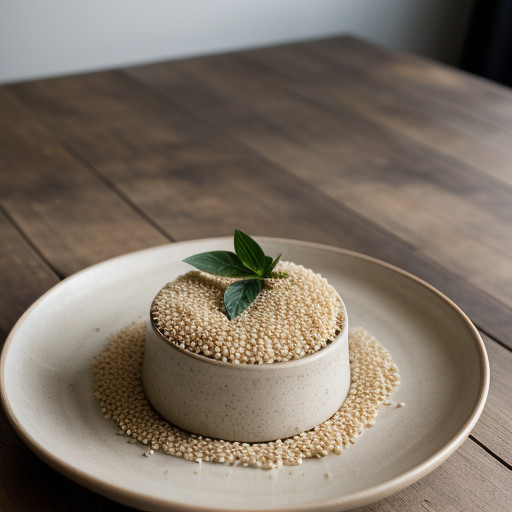
Khao Cua (Ground Toasted Rice)
Description
Khao Cua is a fundamental ingredient in Thai cuisine, offering a nutty aroma and a subtle earthy sweetness that elevates soups, curries, and dipping sauces. Made by simply toasting short-grain rice until golden brown and then grinding it into a fine powder, this versatile addition adds depth without overpowering other flavors. It is particularly prized in dishes like Tom Yum Kung and Nam Prik Pao, where it provides a slight thickening quality and a toasted complexity. This recipe yields a generous batch that stores beautifully in an airtight container, ensuring you always have this essential flavor enhancer on hand for your Thai cooking adventures.Ingredients
Directions
-
Place the short-grain rice in a dry wok or heavy-bottomed skillet over medium-low heat.
-
Stir the rice frequently to ensure even toasting and prevent burning.
-
Continue to toast the rice for 8 to 10 minutes, or until it turns a uniform deep golden brown color and releases a nutty aroma.
-
Remove the wok from the heat and transfer the toasted rice to a plate or bowl to cool completely to room temperature.
-
Once cooled, transfer the rice to a blender, spice grinder, or coffee grinder.
-
Pulse or grind the rice until it becomes a fine, uniform powder.
Nutrition Facts
Servings 1
- Amount Per Serving
- Calories 156.0kcal
- % Daily Value *
- Total Fat 0.4g1%
- Saturated Fat 0.1g1%
- Cholesterol 0.0mg0%
- Sodium 1.2mg1%
- Total Carbohydrate 33.6g12%
- Dietary Fiber 0.5g2%
- Sugars 0.0g
- Protein 3.2g7%
* Percent Daily Values are based on a 2,000 calorie diet. Your daily value may be higher or lower depending on your calorie needs.
Note
Use a dry pan without oil for toasting; oil will cause the rice to fry rather than toast.
Ensure the rice is completely cool before grinding, as residual heat can create moisture and cause clumping.
Store the finished Khao Cua in an airtight container in a cool, dry place. It will keep for several months.
If you do not have a spice grinder, a clean coffee grinder works excellently for this task.
Short-grain rice is traditional, but long-grain jasmine rice can be used as a substitute if preferred.
khao cua, toasted rice powder, thai ingredient, rice flour, nutty flavor, soup thickener, curry base, homemade spice, short grain rice, pan fried, blended, aromatic, vegan, gluten free, pantry staple
