

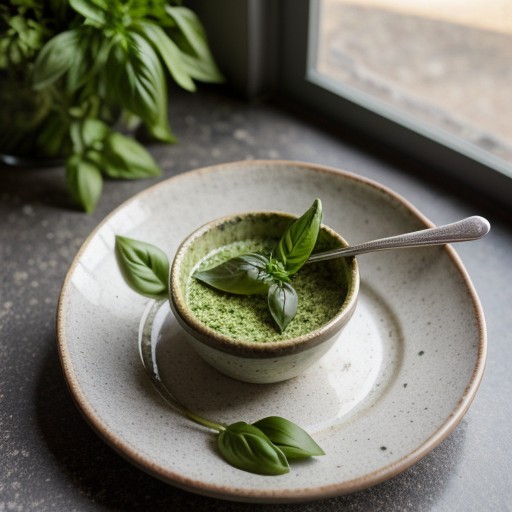
Lean Pesto
Description
This lean pesto offers a brilliant alternative to traditional oil-heavy versions, perfect for those watching their fat intake without sacrificing flavor. By substituting chicken stock for olive oil, you get a bright, herbaceous sauce that is incredibly aromatic and fresh. The combination of packed basil leaves, sharp Parmesan cheese, and pungent garlic creates a robust flavor profile that stands up beautifully to pasta. It is versatile enough to toss with hot noodles, stir into soups, or use as a vibrant topping for vegetables. Quick to blend and easy to store, this sauce brings the taste of Italy to your table with a healthy twist.Ingredients
Directions
-
Place the fresh basil leaves, grated Parmesan cheese, minced garlic, salt, and pepper into the bowl of a food processor fitted with the metal blade.
-
Pulse the mixture several times until the ingredients are finely chopped and well combined.
-
With the machine running, slowly drizzle the chicken stock through the feed tube.
-
Continue processing, scraping down the sides of the bowl as needed, until the pesto is smooth and creamy.
-
Taste and adjust seasoning with additional salt or pepper if desired.
Nutrition Facts
Servings 6
- Amount Per Serving
- Calories 113.8kcal
- % Daily Value *
- Total Fat 6.5g10%
- Saturated Fat 3.7g19%
- Cholesterol 17.6mg6%
- Sodium 313.4mg14%
- Total Carbohydrate 4.1g2%
- Dietary Fiber 1.9g8%
- Sugars 0.5g
- Protein 10.8g22%
* Percent Daily Values are based on a 2,000 calorie diet. Your daily value may be higher or lower depending on your calorie needs.
Note
Storage: The pesto can be prepared up to 2 days in advance. Press a piece of plastic wrap directly onto the surface of the pesto to prevent discoloration, then refrigerate.
Freezing: To freeze, spoon the pesto into ice cube trays and freeze until hard. Once solid, pop the cubes out and seal them in zip-close bags, removing as much air as possible. They will keep for up to 6 months at 0&# 194;°F.
Serving Suggestions: Thaw frozen cubes before use if desired, though they can often be added directly to hot dishes. Serve over hot cooked pasta, toss with cooked vegetables, or drop a cube into soups, especially bean soups, for a burst of flavor.
