

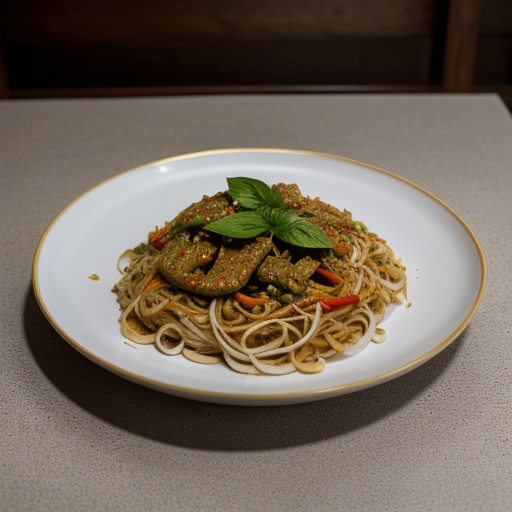
My Pad Thai
Description
This authentic Pad Thai brings the vibrant street-food flavors of Thailand directly to your kitchen. The dish features rice noodles tossed in a rich sauce made from tamarind, fish sauce, and sugar, creating a perfect balance of sweet, sour, and salty notes. Topped with crunchy peanuts, fresh bean sprouts, and crispy fried basil, it offers a delightful contrast of textures. It is an excellent choice for a quick yet impressive weeknight dinner or a fun meal to share with friends. Despite its complex flavor profile, it comes together quickly using standard pantry staples and fresh ingredients.Directions
-
Combine the vinegar, water, fish sauce, tomato paste, sugar, and dried shrimp in a small bowl; mix until well blended and reserve.
-
Soak the rice noodles in a large pot of warm water until pliable but still firm, about 30-40 minutes. Drain and rinse with cold water; set aside.
-
In a small skillet, heat 3/4 to 1 inch of vegetable oil to 350 degrees F (177°C).
-
Deep-fry the basil leaves a few at a time, turning them once or twice until crisp, about 40 seconds to 1 minute. Drain on paper towels.
-
Heat a wok or large skillet over high heat and add 2 1/2 tablespoons of vegetable oil.
-
Stir-fry the Serrano peppers for 30 seconds, then add the garlic and stir-fry until soft, about 30 seconds more.
-
Add the chicken or pork and stir-fry until the chicken is opaque or the pork is browned.
-
Stir in the shrimp and the reserved sauce mixture; mix completely.
-
Make a well in the center of the mixture and pour in the beaten eggs. When almost set, scramble them evenly into the mix.
-
Add half the noodles, thoroughly incorporating them into the mixture. Stir in the remaining noodles and half the bean sprouts.
-
Cook just until the bean sprouts are nearly wilted, tossing constantly to prevent sticking.
-
Heap the meat and noodles onto a serving platter.
-
Garnish with ground peanuts, remaining bean sprouts, lime wedges, cherry tomatoes, mint sprigs, and the fried basil leaves.
Nutrition Facts
Servings 4 servings
- Amount Per Serving
- Calories 520kcal
- % Daily Value *
- Total Fat 22g34%
- Saturated Fat 4g20%
- Cholesterol 150mg50%
- Sodium 1200mg50%
- Total Carbohydrate 55g19%
- Dietary Fiber 3g12%
- Sugars 15g
- Protein 25g50%
* Percent Daily Values are based on a 2,000 calorie diet. Your daily value may be higher or lower depending on your calorie needs.
