

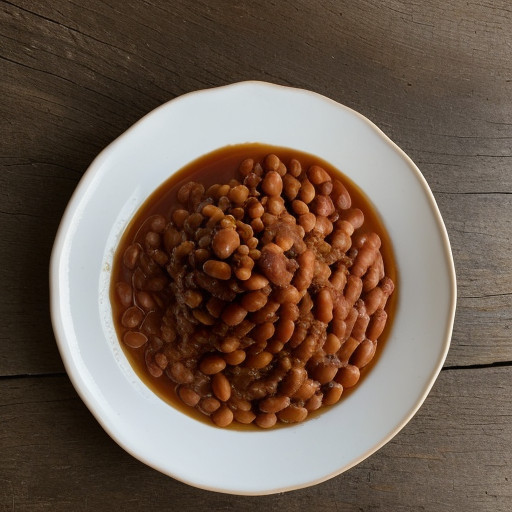
New England Baked Beans (The Real Thing)
Description
These authentic New England baked beans offer the deep, complex flavor that only comes from hours of slow cooking. By starting with dried beans and simmering them with salt pork, molasses, and a touch of mustard, you create a dish that is far superior to canned alternatives. The result is tender beans coated in a rich, glossy sauce that balances sweet and salty notes perfectly. This hearty side dish is ideal for Sunday dinners, autumn gatherings, or any occasion calling for rustic, home-style comfort food. The long, low cooking process allows the flavors to meld beautifully, creating a timeless classic.Ingredients
Directions
-
Sort through dried beans, removing any debris, then soak them in a large bowl of cold water overnight (at least 8 hours).
-
Drain and rinse the soaked beans thoroughly. Place them in a large Dutch oven or heavy baking pot.
-
Add fresh water to cover the beans by about 2 inches. Bring to a boil, then reduce heat and simmer for 45 to 60 minutes, or until beans are tender but not mushy.
-
Drain the beans, reserving about 1 cup of the cooking liquid.
-
Preheat oven to 225F (107C).
-
In a small bowl, combine sugar, molasses, vinegar, ginger, dry mustard, catsup, and salt. Stir until smooth.
-
Add the drained beans, quartered onions, and salt pork (or bacon) to the baking pot. Pour the sauce mixture over the beans.
-
Add enough reserved cooking liquid or fresh water to just cover the beans.
-
Cover the pot tightly and bake at 225F (107C) for 3 hours.
-
Increase oven temperature to 300F (150C). Continue baking for another 3 hours, adding water if necessary to keep beans moist, and stirring occasionally.
-
Remove from oven and let stand for 10 minutes before serving.
Nutrition Facts
Servings 8
- Amount Per Serving
- Calories 511.7kcal
- % Daily Value *
- Total Fat 16.2g25%
- Saturated Fat 5.3g27%
- Cholesterol 17.4mg6%
- Sodium 1896.2mg80%
- Total Carbohydrate 78.3g27%
- Dietary Fiber 2.6g11%
- Sugars 69.9g
- Protein 15.9g32%
* Percent Daily Values are based on a 2,000 calorie diet. Your daily value may be higher or lower depending on your calorie needs.
Note
Traditionally, salt pork is used for its distinct flavor and fat rendering. If using bacon, you may want to render it first in a skillet and add the crispy bits back in, or leave it in chunks as directed.
The beans are ready when you can pick one up with a spoon, blow on it, and the skin wrinkles or shrinks back.
Monitor the liquid level during the long bake. The beans should be simmering gently, not boiling vigorously, and should never run dry. Add hot water as needed.
Leftovers can be stored in an airtight container in the refrigerator for up to 5 days. They also freeze well for up to 3 months.
baked beans, new england, dried beans, salt pork, molasses, slow cooked, comfort food, side dish, traditional, autumn, home style, soy free, vegetarian option, classic, hearty, rich sauce, mustard, onions, ginger, vinegar
