

This classic Pad Thai delivers the perfect balance of sweet, sour, and savory flavors in every bite. The dish centers around soft rice noodles tossed in a rich tamarind-based sauce, complemented by the crunch of roasted peanuts and fresh bean sprouts. It is a vibrant, satisfying meal that captures the essence of traditional Thai street food. Perfect for a quick weeknight dinner or a flavorful lunch, this recipe brings restaurant-quality taste to your home kitchen. The combination of textures&# 226;ÂÂfrom the chewy noodles to the crisp vegetables and nutty garnishâÂÂmakes it an exciting and delicious experience. Serve it hot with lime wedges and extra chili for those who like a kick. It is a crowd-pleaser that is surprisingly easy to whip up with pantry staples and fresh ingredients.
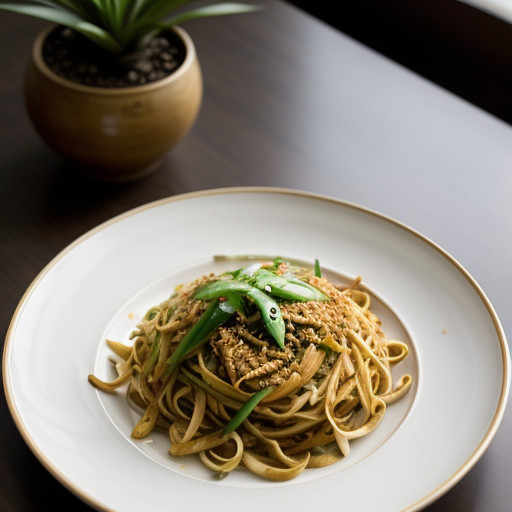
Pad Thai
Description
This classic Pad Thai delivers the perfect balance of sweet, sour, and savory flavors in every bite. The dish centers around soft rice noodles tossed in a rich tamarind-based sauce, complemented by the crunch of roasted peanuts and fresh bean sprouts. It is a vibrant, satisfying meal that captures the essence of traditional Thai street food. Perfect for a quick weeknight dinner or a flavorful lunch, this recipe brings restaurant-quality taste to your home kitchen. The combination of textures&# 226;ÂÂfrom the chewy noodles to the crisp vegetables and nutty garnishâÂÂmakes it an exciting and delicious experience. Serve it hot with lime wedges and extra chili for those who like a kick. It is a crowd-pleaser that is surprisingly easy to whip up with pantry staples and fresh ingredients.Ingredients
Directions
-
Soak the rice noodles in warm water until supple, about 15 minutes, then drain and set aside.
-
Bring a pot of water to a boil. Add the soaked noodles and cook just until the water returns to a boil, then drain immediately.
-
Pat the bean curd dry with paper towels to prevent splattering. Heat oil for deep-frying to 375ðF (191ðC) and fry the bean curd cubes until golden. Drain and set aside.
-
Heat a large wok over high heat. Add peanut oil, then stir-fry garlic until fragrant.
-
Add chicken breast slices to the wok and stir-fry for a few minutes until cooked through.
-
Add shrimp, drained noodles, beaten eggs, and the deep-fried bean curd to the wok. Toss well and stir-fry over medium-high heat for 3 to 4 minutes.
-
Mix in tamarind sauce, fish sauce, sugar, red chili paste, black pepper, and dried shrimp powder. Stir-fry for another 2 minutes until the noodles are hot and coated in sauce.
-
Remove from heat and toss with bean sprouts, chopped scallions, and half of the chopped peanuts.
-
Plate the Pad Thai. Garnish with remaining peanuts, fresh coriander leaves, lime wedges, and serve immediately.
Nutrition Facts
Servings 1
- Amount Per Serving
- Calories 76.6kcal
- % Daily Value *
- Total Fat 3.6g6%
- Saturated Fat 0.6g3%
- Cholesterol 11.9mg4%
- Sodium 320.1mg14%
- Total Carbohydrate 9.3g4%
- Dietary Fiber 0.6g3%
- Sugars 0.3g
- Protein 3.1g7%
* Percent Daily Values are based on a 2,000 calorie diet. Your daily value may be higher or lower depending on your calorie needs.
Note
The original recipe lists this as vegan but includes chicken, shrimp, fish sauce, and eggs. To make this vegan, omit the animal proteins and use soy sauce or tamari instead of fish sauce, and ensure the tamarind sauce is pure tamarind.
For best results, ensure your wok is very hot before adding ingredients to achieve the characteristic "wok hei" or smoky flavor.
If you cannot find tamarind sauce, you can substitute with a mixture of lime juice and brown sugar, though the flavor profile will be slightly different.
Serve immediately while hot. Leftovers can be stored in an airtight container in the refrigerator for up to 2 days, but the noodles may become gummy when reheated.
Adjust the amount of red chili paste to control the spiciness level according to your preference.
