

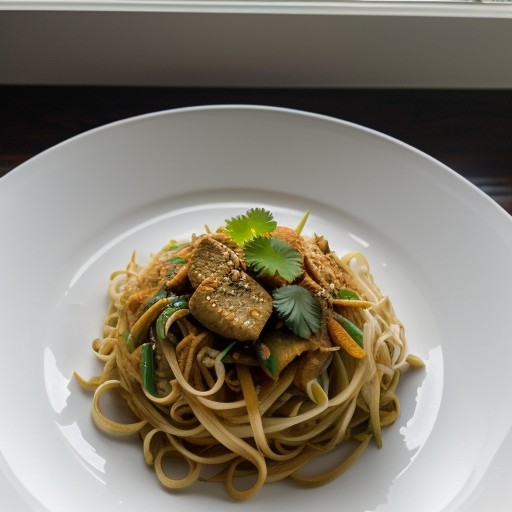
Pad Thai 2
Description
This classic Pad Thai combines silky rice noodles with plump shrimp and tender bean sprouts in a vibrant tamarind-based sauce. The dish strikes a perfect balance between sweet palm sugar, tangy lime, and salty fish sauce, creating a complex flavor profile that is both comforting and exciting. Crispy peanuts and a squeeze of fresh citrus add necessary texture and brightness to every bite. It is an ideal weeknight dinner that comes together in under 30 minutes, offering a restaurant-quality experience at home. Serve it hot with extra lime wedges and chili flakes for those who prefer a spicy kick. This versatile recipe allows for easy customization with chicken or tofu if you prefer a different protein.Ingredients
Directions
-
Soak rice noodles in warm water according to package instructions until soft but still slightly firm. Drain well and set aside.
-
In a small bowl, whisk together tamarind paste, fish sauce, sugar, and tomato paste to create the sauce.
-
Heat vegetable oil in a large wok or skillet over medium-high heat.
-
Add garlic and onion to the hot oil and stir-fry for 1 minute until fragrant.
-
Add shrimp to the wok and cook for 2-3 minutes until pink and opaque. Push shrimp to one side of the wok.
-
Pour beaten eggs into the empty side of the wok and scramble until just set.
-
Add drained noodles and the prepared sauce to the wok. Toss everything together thoroughly, cooking for 2-3 minutes until noodles are heated through and coated in sauce.
-
Stir in bean sprouts and toss for another 30 seconds until slightly wilted but still crunchy.
-
Remove from heat and transfer to serving plates.
-
Garnish with crushed peanuts and serve immediately with lime wedges on the side.
Nutrition Facts
Servings 2
- Amount Per Serving
- Calories 450kcal
- % Daily Value *
- Total Fat 18g28%
- Saturated Fat 3g15%
- Cholesterol 180mg60%
- Sodium 1200mg50%
- Total Carbohydrate 55g19%
- Dietary Fiber 3g12%
- Sugars 8g
- Protein 22g44%
* Percent Daily Values are based on a 2,000 calorie diet. Your daily value may be higher or lower depending on your calorie needs.
Note
For a vegetarian version, substitute shrimp with tofu and use soy sauce instead of fish sauce.
If you cannot find tamarind paste, a mixture of lime juice and a little brown sugar can approximate the flavor, though tamarind provides the authentic sour depth.
Do not overcook the noodles; they should remain slightly chewy (al dente). If they stick together, add a splash of water while tossing in the wok.
Prepare all ingredients before you start cooking, as the stir-frying process happens quickly.
Leftover Pad Thai is best consumed within 2 days. Reheat gently with a splash of water to restore moisture.
pad thai, thai food, rice noodles, shrimp, tamarind, bean sprouts, peanuts, fish sauce, stir fry, asian cuisine, quick dinner, weeknight meal, street food, spicy, vegetarian option, garlic, lime, chili, noodle dish, healthy dinner
