

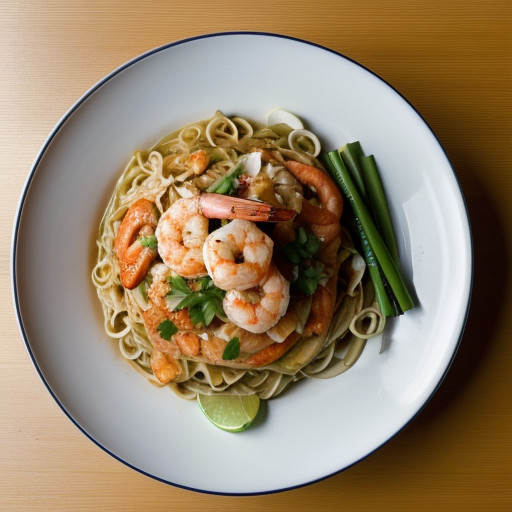
Pad Thai With Shrimp
Description
This authentic Pad Thai delivers a perfect balance of sweet, sour, and savory flavors in every bite. The chewy rice noodles are tossed in a rich sauce made from tamarind, fish sauce, and sugar, then stir-fried with plump shrimp and a beaten egg for richness. Topped with crunchy peanuts and fresh bean sprouts, it offers a delightful contrast of textures. It is a quick yet impressive weeknight dinner that captures the essence of Thai cuisine. Serve it hot with lime wedges and extra chili flakes for those who like a kick. This dish is versatile enough to be made with chicken or tofu if you prefer, but the shrimp version remains a timeless classic for seafood lovers.Ingredients
Directions
-
Soak the rice noodles in cold tap water for about 20 minutes, until they are "springy" but still firm.
-
Drain the noodles in a colander and set aside until needed.
-
If using dried tamarind, soak it in hot water for 10 minutes, then mash with a fork to soften.
-
Force the tamarind mixture through a sieve to remove bits of bark and seeds, collecting the pulp.
-
Heat vegetable oil in a wok or large skillet over medium-high heat.
-
Add the tamarind pulp, tomato sauce, pickled radish, and sugar to the wok.
-
Stir well and let the sauce heat up for about 1 minute.
-
Add the drained noodles to the wok in small portions along with the water or chicken stock.
-
Toss and stir the noodles until they are fully coated with the sauce.
-
Add more liquid if the noodles look dry, as it will cook out quickly.
-
Use a spatula to chop and separate the noodles, tossing them like a salad to ensure even coating.
-
Beat the egg and pour it over the noodles, mixing it in thoroughly.
-
Add the fish sauce and cleaned shrimp to the wok.
-
Stir and toss everything together to combine.
-
Cover the wok with a lid for 1-2 minutes to help the shrimp and egg cook thoroughly.
-
Uncover and continue to toss the mixture until the shrimp are completely pink and opaque.
-
Keep stirring to prevent the noodles from burning or browning too much.
-
Add the bean sprouts, chopped green onions, and finely chopped peanuts.
-
Mix well, then turn off the heat and let stand for 1 minute.
-
Serve immediately.
Nutrition Facts
Servings 1
- Amount Per Serving
- Calories 273.3kcal
- % Daily Value *
- Total Fat 12.7g20%
- Saturated Fat 2.2g12%
- Cholesterol 42.0mg15%
- Sodium 1181.8mg50%
- Total Carbohydrate 33.2g12%
- Dietary Fiber 2.4g10%
- Sugars 1.4g
- Protein 11.1g23%
* Percent Daily Values are based on a 2,000 calorie diet. Your daily value may be higher or lower depending on your calorie needs.
Note
**Ingredient Substitutions:** If you cannot find tamarind paste, you can substitute with a mix of lime juice and brown sugar for a similar sweet-sour profile. For a vegan version, omit the shrimp, egg, and fish sauce, and use soy sauce or tamari instead.
**Storage:** Pad Thai is best eaten fresh. If you have leftovers, store them in an airtight container in the refrigerator for up to 2 days. Reheat gently in a skillet with a splash of water to restore moisture.
**Tips:** Do not soak the rice noodles for too long, as they will become mushy during cooking. They should still have a little bite before going into the wok. Have all ingredients prepped and within reach before you start cooking, as the stir-frying process moves quickly.
