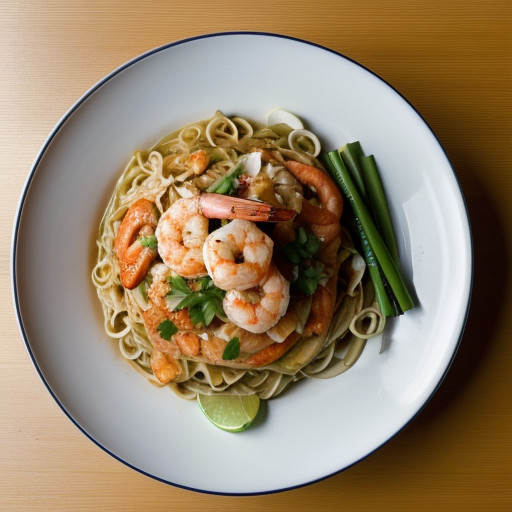
Servings 1
- Amount Per Serving
- % Daily Value *
- Total Fat 12.7g20%
- Saturated Fat 2.2g12%
- Cholesterol 42.0mg15%
- Sodium 1181.8mg50%
- Total Carbohydrate 33.2g12%
- Dietary Fiber 2.4g10%
- Sugars 1.4g
- Protein 11.1g23%
* Percent Daily Values are based on a 2,000 calorie diet. Your daily value may be higher or lower depending on your calorie needs.
Note
**Ingredient Substitutions:** If you cannot find tamarind paste, you can substitute with a mix of lime juice and brown sugar for a similar sweet-sour profile. For a vegan version, omit the shrimp, egg, and fish sauce, and use soy sauce or tamari instead.
**Storage:** Pad Thai is best eaten fresh. If you have leftovers, store them in an airtight container in the refrigerator for up to 2 days. Reheat gently in a skillet with a splash of water to restore moisture.
**Tips:** Do not soak the rice noodles for too long, as they will become mushy during cooking. They should still have a little bite before going into the wok. Have all ingredients prepped and within reach before you start cooking, as the stir-frying process moves quickly.
Keywords:
pad thai, shrimp, rice noodles, thai food, tamarind, stir fry, bean sprouts, peanuts, fish sauce, asian cuisine, quick dinner, egg, wok, spicy, street food