

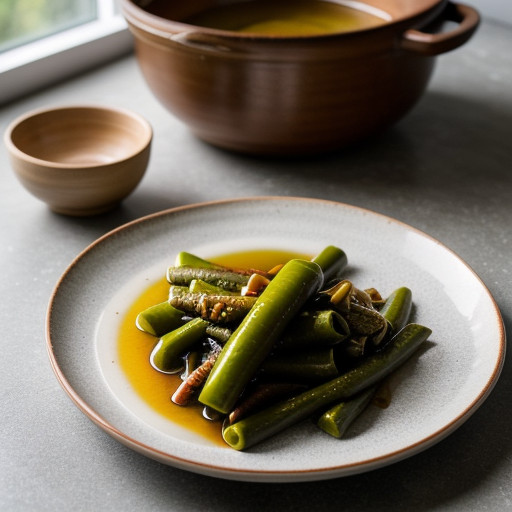
Preparing Pickled & Fermented Foods
Description
Master the art of preservation with this essential guide to making pickled and fermented foods. Whether you are crafting quick refrigerator dills or traditional lactic-acid fermented sauerkraut, understanding the balance of salt, vinegar, and time is key. These methods transform fresh vegetables into tangy, crunchy pantry staples that add depth to any meal. This guide covers safety basics, ingredient selection, and techniques for ensuring crispness and preventing spoilage. Perfect for home cooks looking to reduce waste and enjoy the health benefits of probiotics, this resource provides clear instructions for both beginner and advanced preservationists. Create delicious, shelf-stable treats that bring a burst of flavor to salads, sandwiches, and main dishes throughout the year.Ingredients
Directions
-
Select fresh, firm vegetables free of spoilage and wash thoroughly under cold running water.
-
Trim a 1/16-inch slice from the blossom end of cucumbers to remove enzymes that cause softening.
-
Prepare your canning jars by washing them in hot, soapy water and rinsing well; keep them hot until ready to use.
-
For quick pickles, combine vinegar, water, sugar, and pickling salt in a pot and bring to a boil.
-
For fermented foods, dissolve non-iodized pickling salt in water to create a brine solution of the correct percentage.
-
Pack prepared vegetables tightly into clean jars, adding spices like dill, garlic, or mustard seeds as desired.
-
Pour the hot vinegar brine or room-temperature salt brine over the vegetables, leaving appropriate headspace.
-
Remove air bubbles by inserting a non-metallic utensil into the jar and wipe the rims clean with a vinegar-dampened cloth.
-
Apply lids and screw bands until fingertip tight; do not overtighten.
-
Process jars in a boiling-water bath canner for the time specified by the recipe size and altitude.
-
Remove jars and let them cool undisturbed for 12 to 24 hours to seal.
-
Check seals by pressing the center of the lid; if it does not pop back, refrigerate and use within a week.
-
Store sealed jars in a cool, dark place for best flavor and shelf stability.
Nutrition Facts
Servings 1
- Amount Per Serving
- Calories 32.2kcal
- % Daily Value *
- Total Fat 0.8g2%
- Saturated Fat 0.1g1%
- Cholesterol 0.0mg0%
- Sodium 51.8mg3%
- Total Carbohydrate 5.8g2%
- Dietary Fiber 1.6g7%
- Sugars 0.8g
- Protein 2.6g6%
* Percent Daily Values are based on a 2,000 calorie diet. Your daily value may be higher or lower depending on your calorie needs.
pickling, fermentation, preservation, probiotics, safer, canning, vinegar, brine, crisp, tangy, vegetables, homemade, pantry, spices, acid, botulism, storage, guide, techniques, flavor
