

Step back in time with this authentic interpretation of Apicius’ classic “Chicken a la Fronto.” This dish celebrates the bold, umami-rich flavors of ancient Rome, relying on liquamen (fish sauce) as its primary seasoning agent rather than modern salt. The chicken is fried briefly before roasting, ensuring crisp skin while the meat stays tender. Aromatic greens like dill, coriander, and saturei infuse the meat with earthy freshness, while the leek adds a mild sweetness. The final touch of defritum—a rich paste of breadcrumbs, herbs, and oil—adds a luxurious texture and depth. Perfect for a historical dinner party or when you want to impress guests with a dish that has stood the test of centuries, this recipe is simple yet profoundly flavorful.
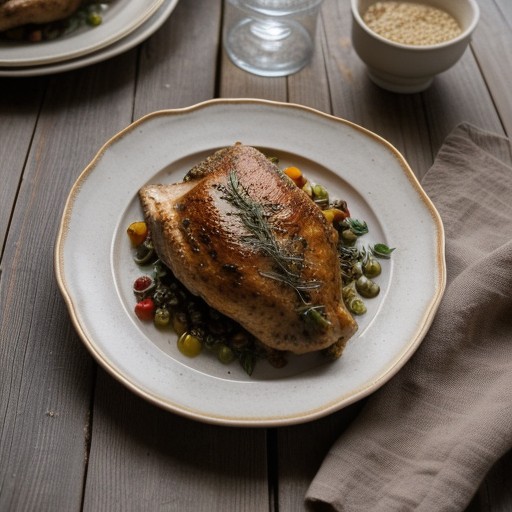
PULLUM FRONTONIANUM (Chicken a la Fronto)
Description
Step back in time with this authentic interpretation of Apicius’ classic "Chicken a la Fronto." This dish celebrates the bold, umami-rich flavors of ancient Rome, relying on liquamen (fish sauce) as its primary seasoning agent rather than modern salt. The chicken is fried briefly before roasting, ensuring crisp skin while the meat stays tender. Aromatic greens like dill, coriander, and saturei infuse the meat with earthy freshness, while the leek adds a mild sweetness. The final touch of defritum—a rich paste of breadcrumbs, herbs, and oil—adds a luxurious texture and depth. Perfect for a historical dinner party or when you want to impress guests with a dish that has stood the test of centuries, this recipe is simple yet profoundly flavorful.Ingredients
Directions
-
Preheat your oven to 220°C (425°F).
-
Prepare the chicken by patting it dry. If using a whole chicken, truss it for even cooking.
-
In a large, oven-safe skillet or roasting pan, heat the oil over medium-high heat.
-
Fry the chicken briefly on all sides until golden brown. This step helps crisp the skin before the long roast.
-
In a small bowl, mix the Liquamen (or wine and salt mixture) with the chopped leek, fresh dill, Saturei, and coriander.
-
Pour this herb and sauce mixture over the chicken in the pan.
-
Transfer the pan to the preheated oven. Roast for approximately 1 hour, or until the chicken is cooked through and juices run clear.
-
While the chicken rests, prepare the serving plate by moistening it with a thin layer of Defritum.
-
Place the roasted chicken on the Defritum-coated plate.
-
Sprinkle with fresh pepper and serve immediately.
Note
Liquamen is the ancient Roman equivalent of fish sauce. If you cannot find authentic liquamen, a high-quality Asian fish sauce or a mixture of white wine and salt (as noted in the ingredients) works as a historical approximation.
Defritum is a thick paste made from breadcrumbs, herbs, oil, and sometimes nuts or cheese. It acts as a flavorful glaze or sauce base. You can make a simple version by mixing toasted breadcrumbs with olive oil and herbs.
Saturei refers to savory, likely winter savory, which has a peppery, thyme-like flavor. If unavailable, a mix of thyme and sage is a suitable substitute.
This recipe is based on Apicius’ "De Re Coquinaria," specifically Book 1, Recipe 10.
