

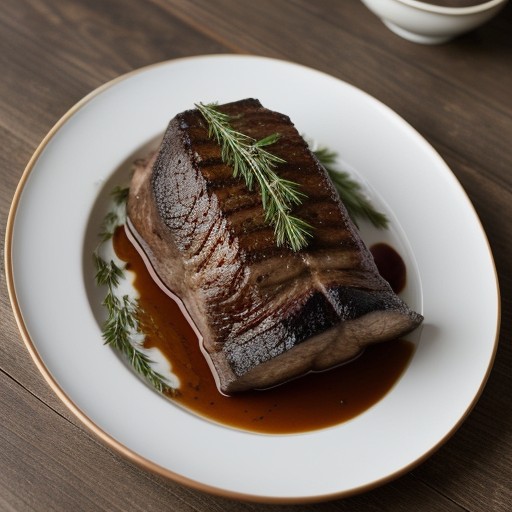
Roast Leg Of Venison, Unmarinated
Description
This unmarinated roast leg of venison relies on high-quality larding and fresh herbs to keep the lean meat incredibly moist and tender. By inserting strips of salt pork and garlic, you infuse rich flavor directly into the fibers, preventing the venison from drying out during roasting. The exterior is dusted with powdered thyme and butter for a savory crust. Served rare to medium-rare, this dish offers a deep, gamey sweetness balanced by the richness of the lard. It is an impressive centerpiece for holiday dinners or special weekend meals, accompanied by a simple pan gravy made from the roasting drippings. Serve with roasted root vegetables or mashed potatoes to soak up the flavorful juices.Ingredients
Directions
-
Preheat oven to 325&# 194;°F (163ðC).
-
Using a larding needle or a sharp knife, insert the 10 strips of salt pork into the leg of venison at even intervals.
-
Insert the sliced garlic cloves into the venison alongside the salt pork strips to infuse flavor.
-
Rub the entire surface of the venison leg with the softened butter.
-
Dust the buttered venison evenly with powdered thyme.
-
Place the prepared roast in an uncovered roasting pan and add 1/2 cup of stock or water to the bottom of the pan.
-
Roast in the preheated oven for approximately 16 minutes per pound, aiming for a rare to medium-rare doneness (internal temperature of 125-130ðF).
-
Remove the roast from the oven and transfer it to a warm serving platter or metal pan.
-
Tent loosely with foil and let rest for 15-20 minutes before carving.
-
While the meat rests, place the roasting pan on the stovetop over medium heat.
-
Sprinkle the flour over the pan drippings and stir constantly to create a roux.
-
Gradually whisk in the remaining stock or beef broth.
-
Continue cooking and stirring until the gravy thickens to your desired consistency.
-
Season the gravy with salt and pepper to taste.
-
Slice the venison and serve with the hot pan gravy.
Nutrition Facts
Servings 10
- Amount Per Serving
- Calories 2255.0kcal
- % Daily Value *
- Total Fat 250.0g385%
- Saturated Fat 97.5g488%
- Cholesterol 0.0mg0%
- Sodium 0.0mg0%
- Total Carbohydrate 0.0g0%
- Dietary Fiber 0.0g0%
- Sugars 0.0g
- Protein 0.0g0%
* Percent Daily Values are based on a 2,000 calorie diet. Your daily value may be higher or lower depending on your calorie needs.
Note
Use a meat thermometer to ensure accuracy. Venison is best served rare to medium-rare; overcooking will make it tough and dry.
If you do not have salt pork, you can substitute with bacon strips or thin slices of pancetta for larding.
"Larding" is the technique of inserting fat into lean meat to keep it moist during cooking. Ensure the strips are long enough to penetrate deeply.
For a richer gravy, you can add a splash of red wine to the roasting pan before adding the broth.
Store leftover venison in an airtight container in the refrigerator for up to 3 days. Reheat gently to avoid drying out.
venison, roast, game meat, larding, salt pork, garlic, thyme, pan gravy, holiday dinner, special occasion, roasting, beef broth, flour, butter, main course, traditional
