

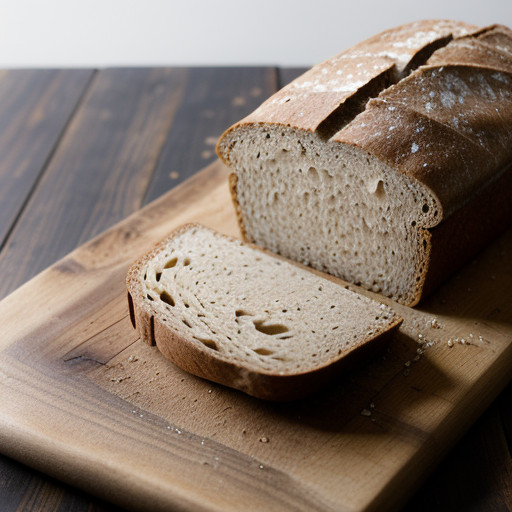
Ruisleipa (Sour Rye Bread)
Description
Ruisleipa is a staple of Finnish cuisine, renowned for its distinctive sour taste and hearty texture. This recipe uses a natural starter or a long fermentation process to develop complex flavors that cannot be rushed. The combination of rye flour and white flour creates a bread that is dense yet tender, with a dark, crusty exterior. It pairs beautifully with traditional Finnish dishes like salmon, herring, or simple butter and dill.Directions
-
In a large mixing bowl, combine the sour bread starter and 2 cups of warm water or potato water.
-
Stir in 1 cup of the rye flour until well blended.
-
Cover the bowl lightly and let the mixture stand in a warm place for 20 to 40 hours, depending on how sour you prefer the bread.
-
Dissolve the active dry yeast in 1/4 cup of warm water and stir this into the soured mixture.
-
Add the salt and gradually beat in the remaining rye flour.
-
Add the sifted white flour a little at a time, beating well after each addition until a stiff dough forms.
-
Let the dough rest for 10 to 15 minutes.
-
Turn the dough out onto a floured board and knead until smooth.
-
Place the dough into a slightly greased bowl, turning it once to grease the top.
-
Cover the bowl and let the dough rise until doubled in bulk.
-
Divide the dough into two parts. Reserve 1/2 cup of dough for your next baking, keeping it in a covered container in the refrigerator.
-
For Eastern-Finnish style loaves: Shape each piece of dough into a ball and place on a lightly greased baking sheet. Cover and let rise until almost doubled, about 30 minutes.
-
For Western-Finnish style flat loaves: Shape the dough into two balls, then flatten by patting to about 1 inch thick, keeping the shape round.
-
Using your fingers, make a hole in the center of each flat loaf about 2 inches in diameter.
-
Dust the tops lightly with rye flour and prick all over with a fork.
-
Place the loaves on a lightly greased baking sheet, cover, and let rise until about double in bulk, about 30 minutes.
-
Bake in a 375°F (191°C) preheated oven for 45 minutes, or until the loaves are lightly browned.
Nutrition Facts
Servings 2 cups
- Amount Per Serving
- Calories 111kcal
- % Daily Value *
- Total Fat 0.4g1%
- Saturated Fat 0.1g1%
- Sodium 628mg27%
- Total Carbohydrate 23.1g8%
- Dietary Fiber 1.0g4%
- Sugars 0.2g
- Protein 3.1g7%
* Percent Daily Values are based on a 2,000 calorie diet. Your daily value may be higher or lower depending on your calorie needs.
finnish, rye bread, sourdough, ruisleipa, traditional, fermentation, whole grain, sour, dense, hearty, homemade, baking, vegan, scandinavian, loaf, tangy, crusty, fermented, bread making, staple
