

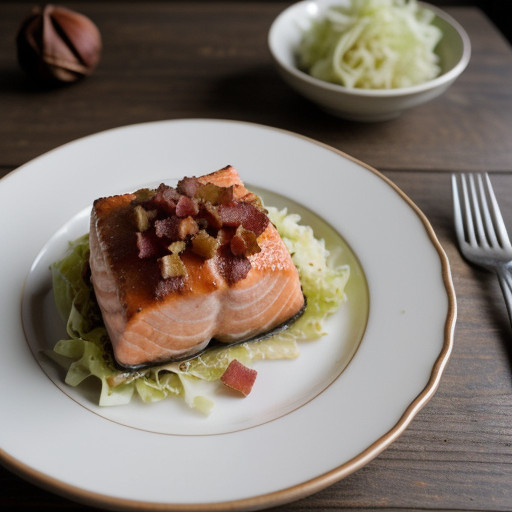
Salmon W/ Cabbage, Chestnuts & Bacon
Description
This elegant yet comforting dish features a whole salmon stuffed with a hearty mixture of shredded red cabbage, crisp slab bacon, and sweet roasted chestnuts. The combination of smoky bacon and earthy chestnuts provides a wonderful contrast to the delicate, flaky fish. Baked in white wine, the salmon stays moist and flavorful throughout the cooking process. It is finished with a sharp, aromatic sauce made from shallots, white wine, and vinegar that cuts through the richness of the dish. Perfect for holiday gatherings, special dinner parties, or when you want to impress guests with a show-stopping main course that feels both rustic and refined. Serve family-style for a memorable dining experience.Ingredients
Directions
-
Preheat the oven to 350F (175C).
-
Using a small knife, make a shallow slit in the curved side of each chestnut. Spread them on a baking sheet and roast for 30-35 minutes until the skins split and they are tender.
-
Remove chestnuts from the oven. When cool enough to handle, peel off the inner and outer skins. Set aside.
-
Cut the slab bacon into 1/2-inch cubes. Finely shred the two small red cabbages.
-
Place the bacon cubes in a large skillet over medium heat. Cook, stirring occasionally, for about 5 minutes until the bacon begins to brown and render fat.
-
Add the shredded cabbage to the skillet with the bacon. Cover and cook for 6-7 minutes, stirring occasionally, until the cabbage is well wilted but still retains some texture.
-
Remove the skillet from heat. Stir the peeled chestnuts into the cabbage and bacon mixture. Transfer the filling to a bowl to cool slightly.
-
Prepare the salmon by cleaning it and ensuring the cavity is open. Sprinkle the inside of the salmon cavity with the freshly ground pepper.
-
Stuff the salmon cavity generously with the cabbage, bacon, and chestnut mixture. Secure the opening with kitchen twine or toothpicks if necessary to keep the stuffing inside.
-
Place the stuffed salmon in a roasting pan. Pour 1 cup of the dry white wine into the bottom of the pan and add 2 tablespoons of the unsalted butter.
-
Place the roasting pan in the oven, uncovered, and bake for 20 minutes.
-
Carefully turn the salmon over in the pan. Bake for another 15-20 minutes, or until the flesh is opaque and just barely cooked at the bone. The internal temperature should reach 145F (63C).
-
While the salmon is baking, prepare the sauce. In a small saucepan over medium heat, combine the minced shallots, the remaining 1 cup of white wine, the white vinegar, and the salt.
-
Bring the sauce mixture to a simmer and cook until it reduces and is almost dry, concentrating the flavors.
-
Remove the saucepan from heat. Whisk in the remaining 1/2 cup of unsalted butter until the sauce is smooth and emulsified.
-
Carefully transfer the cooked salmon to a large serving platter. Remove any twine or toothpicks.
-
Serve the salmon immediately, offering the warm vinegar-shallot sauce on the side for guests to drizzle over their portions.
Nutrition Facts
Servings 6
- Amount Per Serving
- Calories 307.0kcal
- % Daily Value *
- Total Fat 23.8g37%
- Saturated Fat 7.9g40%
- Cholesterol 26.1mg9%
- Sodium 974.4mg41%
- Total Carbohydrate 0.8g1%
- Dietary Fiber 0.0g0%
- Sugars 0.3g
- Protein 21.0g42%
* Percent Daily Values are based on a 2,000 calorie diet. Your daily value may be higher or lower depending on your calorie needs.
Note
Choose a whole salmon that has been cleaned and scaled by your fishmonger. Ensure the gills and entrails are completely removed before stuffing.
If fresh chestnuts are out of season or difficult to find, you can use high-quality canned or vacuum-packed roasted chestnuts. If using canned, pat them dry before adding to the filling to prevent excess moisture.
For the bacon, thick-cut slab bacon works best for the desired texture. If you prefer a milder flavor, you can substitute with standard center-cut bacon, but reduce cooking time slightly to prevent burning.
The vinegar sauce is quite sharp and acidic, designed to cut through the richness of the salmon and bacon. If you prefer a milder sauce, you can reduce the amount of vinegar by half or add a teaspoon of sugar to balance the acidity.
When turning the salmon in the oven, use two large spatulas to support the fish and prevent it from breaking. Alternatively, you can bake it on one side for a slightly longer time, checking for doneness by flaking the flesh at the thickest part.
Leftover salmon can be stored in an airtight container in the refrigerator for up to 2 days. The stuffing can be served cold as a side salad or reheated gently. The sauce can be reheated and whisked with a little fresh butter to restore its emulsion.
Garnish the serving platter with fresh parsley sprigs and lemon wedges to add a pop of color and fresh citrus flavor that complements the dish.
