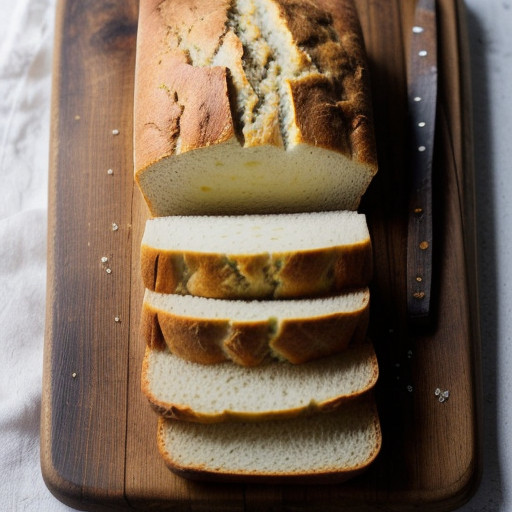
Servings 3
- Amount Per Serving
- % Daily Value *
- Total Fat 17.9g28%
- Saturated Fat 3.3g17%
- Cholesterol 1.6mg1%
- Sodium 1200.0mg50%
- Total Carbohydrate 557.8g186%
- Dietary Fiber 24.2g97%
- Sugars 20.7g
- Protein 73.1g147%
* Percent Daily Values are based on a 2,000 calorie diet. Your daily value may be higher or lower depending on your calorie needs.
Note
Temperature Control: The success of salt-rising bread depends heavily on maintaining a warm environment (85F-90F / 29C-32C) during the fermentation stages. Use an oven with the light on, a proofing box, or wrap the bowl in towels in a warm spot.
Starter Storage: If you do not plan to bake immediately, the initial potato starter can be kept in the refrigerator for up to a week. Bring it back to room temperature before using.
Dough Consistency: Salt-rising dough is typically stickier than yeast dough. Do not add too much extra flour, as this can result in a dense loaf. The dough should pull away from the sides of the bowl but remain soft.
Rising Time: The second rise (proofing) can take longer than yeast breads. Be patient and wait until the dough has clearly doubled in size before baking.
Keywords:
bread, salt-rising, starter, sponge, fermentation, no-yeast, southern, potato, cornmeal, honey, tangy, homemade, leavening, artisan, loaf, traditional, flour, milk, kneading, baking