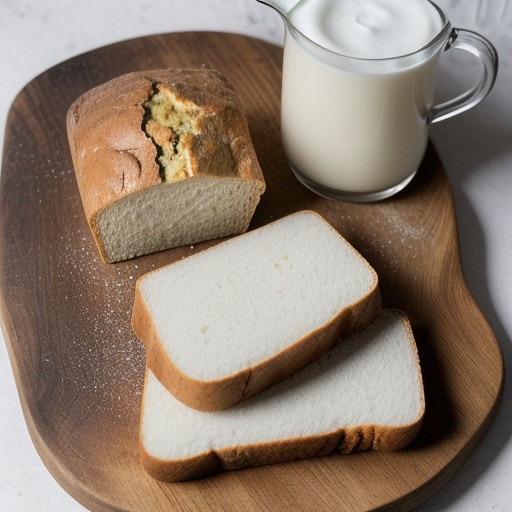
Servings 6
- Amount Per Serving
- % Daily Value *
- Total Fat 0.5g1%
- Saturated Fat 0.1g1%
- Cholesterol 0.0mg0%
- Sodium 4881.3mg204%
- Total Carbohydrate 22.4g8%
- Dietary Fiber 2.5g10%
- Sugars 2.1g
- Protein 2.4g5%
* Percent Daily Values are based on a 2,000 calorie diet. Your daily value may be higher or lower depending on your calorie needs.
Note
Temperature is critical for salt rising bread. The starter and dough need a consistent warm environment (80-90F) to ferment properly. If your kitchen is cool, place the bowl in the oven with the light on.
The starter can be saved for future batches. Store leftovers in the refrigerator for up to two weeks. To use, mix with fresh milk and sugar and let it reactivate at room temperature before adding to the dough.
If the dough smells excessively foul or looks discolored, discard it and start over. A healthy starter should smell slightly yeasty and tangy, not rotting.
This bread is best eaten fresh. It can be frozen for up to three months; wrap tightly in plastic and foil. Thaw at room temperature and toast slices for best texture.
Keywords:
salt rising bread, sourdough alternative, wild yeast, cornmeal starter, potato bread, traditional baking, fluffy bread, artisan bread, homemade loaf, fermented bread, southern cuisine, bread making, kneading, rising, oven baked, vegetarian, comfort food