

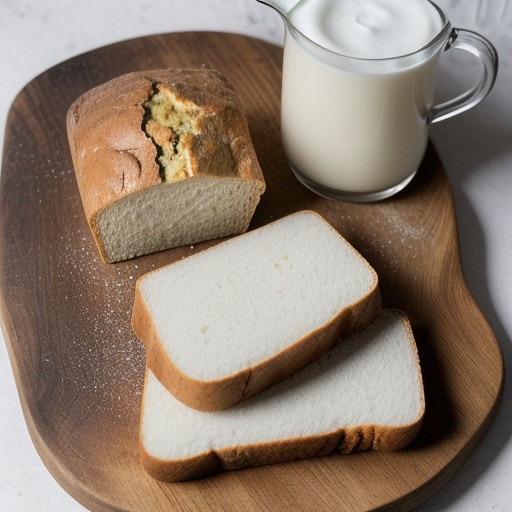
Salt Rising Bread
Description
Salt rising bread is a Southern American specialty that offers a distinct, slightly tangy flavor and an incredibly soft, pillowy texture. Unlike traditional yeasted breads, this loaf relies on wild yeasts and bacteria found in cornmeal and potatoes to rise, creating a unique crumb structure. The process requires patience, as the starter must ferment overnight to develop its characteristic flavor. This hearty bread is perfect for breakfast sandwiches, dipping into chili, or simply enjoying warm with butter. Its a rewarding project for home bakers looking to try something different from standard yeast breads.Ingredients
Directions
-
Place sliced potatoes in a large bowl and cover with boiling water.
-
Let potatoes boil until tender, then drain, reserving the hot water.
-
Mash the boiled potatoes slightly and mix with cornmeal, sugar, 1 teaspoon salt, and enough reserved hot water to create a thick, porridge-like consistency.
-
Cover the bowl tightly with plastic wrap and let it stand in a warm place (around 80-90F) overnight, or until bubbles form and it smells slightly sour.
-
The next day, stir in the lukewarm milk, 1 cup warm water, baking soda, and melted shortening into the starter mixture.
-
Gradually add flour, about one cup at a time, mixing until a stiff dough forms.
-
Turn the dough out onto a floured surface and knead until smooth and elastic, about 10 minutes.
-
Shape the dough into loaves and place them in greased loaf pans.
-
Cover the loaves with a damp cloth and let them rise in a warm place until doubled in size, about 1 to 2 hours.
-
Preheat oven to 400F (200C).
-
Bake the loaves for 45 minutes, or until golden brown and hollow-sounding when tapped on the bottom.
-
Remove from pans and cool on a wire rack before slicing.
Nutrition Facts
Servings 6
- Amount Per Serving
- Calories 103.3kcal
- % Daily Value *
- Total Fat 0.5g1%
- Saturated Fat 0.1g1%
- Cholesterol 0.0mg0%
- Sodium 4881.3mg204%
- Total Carbohydrate 22.4g8%
- Dietary Fiber 2.5g10%
- Sugars 2.1g
- Protein 2.4g5%
* Percent Daily Values are based on a 2,000 calorie diet. Your daily value may be higher or lower depending on your calorie needs.
Note
Temperature is critical for salt rising bread. The starter and dough need a consistent warm environment (80-90F) to ferment properly. If your kitchen is cool, place the bowl in the oven with the light on.
The starter can be saved for future batches. Store leftovers in the refrigerator for up to two weeks. To use, mix with fresh milk and sugar and let it reactivate at room temperature before adding to the dough.
If the dough smells excessively foul or looks discolored, discard it and start over. A healthy starter should smell slightly yeasty and tangy, not rotting.
This bread is best eaten fresh. It can be frozen for up to three months; wrap tightly in plastic and foil. Thaw at room temperature and toast slices for best texture.
