

This hearty “Jackass Bread” is a robust, no-nonsense loaf that delivers on flavor and texture. Combining the tang of sourdough starter with the reliability of active yeast, this bread features a beautiful golden crust and a chewy, satisfying interior. It’s perfect for slicing thick for sandwiches, dipping into olive oil, or simply enjoying with butter. The long fermentation process develops complex flavors, while the Dutch oven baking method ensures even rising and a professional finish. Ideal for casual family dinners, potlucks, or as a comforting side to stews and soups, this bread is a versatile staple that freezes beautifully for later use.
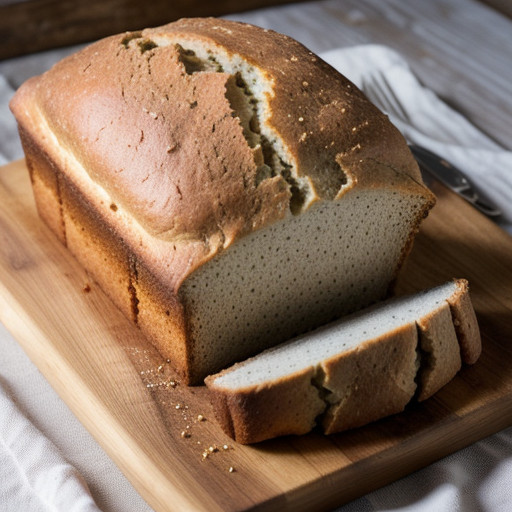
Sheepcamp Jackass Bread
Description
This hearty "Jackass Bread" is a robust, no-nonsense loaf that delivers on flavor and texture. Combining the tang of sourdough starter with the reliability of active yeast, this bread features a beautiful golden crust and a chewy, satisfying interior. It&# 226;ÂÂs perfect for slicing thick for sandwiches, dipping into olive oil, or simply enjoying with butter. The long fermentation process develops complex flavors, while the Dutch oven baking method ensures even rising and a professional finish. Ideal for casual family dinners, potlucks, or as a comforting side to stews and soups, this bread is a versatile staple that freezes beautifully for later use.Ingredients
Directions
-
Dissolve the sourdough starter in the warm water.
-
Add 3 cups of the bread flour to the starter mixture.
-
Cover the bowl with a wet dishtowel.
-
Let the mixture ferment at room temperature overnight to create a sponge.
-
The next morning, dissolve the active yeast in 3 tablespoons of warm water mixed with the sugar.
-
Mix the sponge with the yeast mixture, salt, oil, and baking soda.
-
Let the mixture sit until it becomes bubbly.
-
Gradually add the remaining bread flour until a heavy dough forms that separates from the sides of the bowl.
-
Turn the dough out onto a floured surface and knead for about 5 minutes until elastic.
-
Place the dough in a well-greased, covered bowl.
-
Let the dough rise until it doubles in size.
-
Punch down the dough and knead briefly.
-
Fill an 8-inch Dutch Oven halfway with the dough.
-
Cover the Dutch Oven with a lid and let the dough rise until it fills the pot (doubles in size).
-
Bake at 375ðF (191ðC) for 30 minutes.
-
Reduce the heat to 325ðF (163ðC) and bake for an additional 40 minutes.
-
Turn the bread out onto a cooling rack.
-
Thump the bottom of the loaf; if it sounds hollow, it is done. If not, return it to the oven for a few more minutes.
-
Let the bread cool completely before slicing.
Nutrition Facts
Servings 60
- Amount Per Serving
- Calories 2122.1kcal
- % Daily Value *
- Total Fat 14.2g22%
- Saturated Fat 1.8g9%
- Cholesterol 0.0mg0%
- Sodium 10441.3mg436%
- Total Carbohydrate 427.5g143%
- Dietary Fiber 13.9g56%
- Sugars 10.9g
- Protein 73.2g147%
* Percent Daily Values are based on a 2,000 calorie diet. Your daily value may be higher or lower depending on your calorie needs.
Note
For best results, ensure your sourdough starter is active and bubbly before beginning.
Storage: Cut the loaf into quarters and freeze 3/4 of it for future use. Thaw slices as needed.
Variations: If you have more than half a Dutch Oven worth of dough, shape the excess into rolls, biscuits, or a 1-pound loaf for variety.
Tip: The "thump test" is a reliable way to check for doneness. A fully baked loaf will sound hollow when tapped on the bottom.
